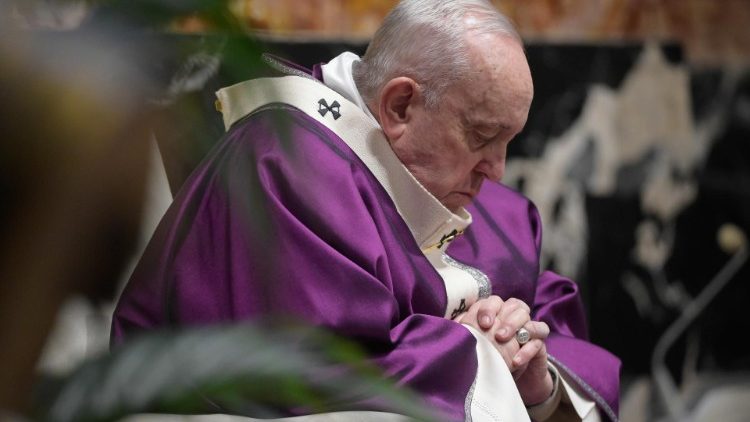
・教皇、膝の劇痛でフィレンツェでの集いと「灰の水曜日」の儀式参加中止
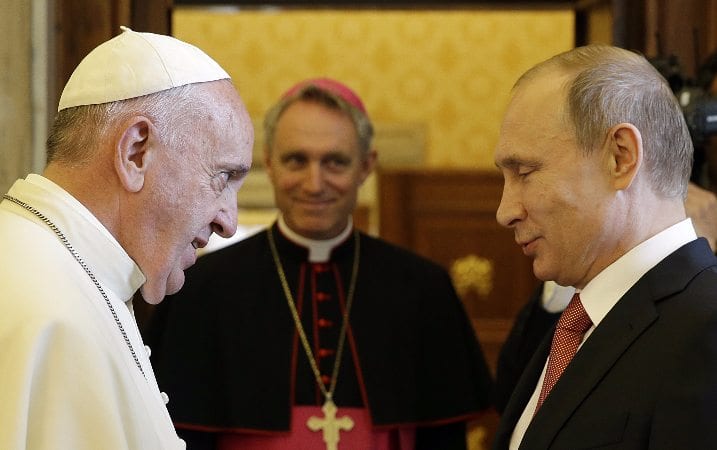
2015年6月にはバチカンを訪問したプーチン大統領とお会いになっていた (Credit: AP Photo/Gregorio Borgia, Pool.)
Crux is dedicated to smart, wired and independent reporting on the Vatican and worldwide Catholic Church. That kind of reporting doesn’t come cheap, and we need your support. You can help Crux by giving a small amount monthly, or with a onetime gift. Please remember, Crux is a for-profit organization, so contributions are not tax-deductible.

Crux is dedicated to smart, wired and independent reporting on the Vatican and worldwide Catholic Church. That kind of reporting doesn’t come cheap, and we need your support. You can help Crux by giving a small amount monthly, or with a onetime gift. Please remember, Crux is a for-profit organization, so contributions are not tax-deductible.
BY WHICH SOME RULES OF THE CODE OF CANON LAW AND THE CODE OF CANONS OF THE EASTERN CHURCHES ARE CHANGED
Therefore, bearing in mind the ecclesial culture and the juridical mentality proper to each Code, I considered it convenient to make changes to the legislation in force up to now on some specific subjects, attributing the respective competences. Thus, it is intended above all to foster the sense of collegiality and pastoral responsibility of Bishops, diocesan / eparchial or gathered in Episcopal Conferences or according to Eastern hierarchical Structures, as well as major Superiors, and also to support the principles of rationality, effectiveness and efficiency.
These normative changes reflect even more the shared and plural universality of the Church, which includes differences without homologating them, with the guarantee, as regards unity, of the ministry of the Bishop of Rome. At the same time, a more rapid effectiveness of the pastoral action of government on the part of the local authority is encouraged, also facilitated by its very proximity to the people and situations that require it.
All that considered, I now have the following:
Art. 1
The can. 237 § 2 CIC on the erection of an interdiocesan seminary and its own statutes replaces the term approval with the term confirmation, thus formulated:
§2. An interdiocesan seminary is not established unless confirmation of the Apostolic See has been obtained, both in relation to the erection of the seminary and in relation to its statutes: by the Episcopal Conference, if it is a seminary for everything. the corresponding territory, otherwise by the bishops concerned.
Art. 2
The can. 242 § 1 CIC on the Ratio of priestly formation issued by the Episcopal Conference replaces the approved term with the confirmed term resulting formulated as follows:
§ 1. In every nation there should be a Ratio of priestly formation, issued by the Episcopal Conference on the basis of the norms established by the supreme authority of the Church and confirmed by the Holy See, adaptable to new situations with a new confirmation of the Holy See; it defines the essential principles and general norms of seminarian formation, adapted to the pastoral needs of each region or province.
Art. 3
The text of can. 265 CIC concerning the institution of incardination adds to the structures suitable for incardinating clerics also that of clerical public associations that have obtained this faculty from the Apostolic See, thus harmonizing with can. 357 § 1 CCEO. It is formulated as follows:
Every cleric must be incardinated either in a particular Church or in a personal prelature or in an institute of consecrated life or in a society that has the faculty, or even in a clerical public association which has obtained this faculty from the Apostolic See, in a manner that headless clerics or wanderers are absolutely not allowed.
Art. 4
The can. 604 CIC on the order of virgins and their right to associate includes a new paragraph formulated as follows:
§ 3. The recognition and establishment of such associations at the diocesan level belongs to the diocesan bishop, within his own territory, at the national level it belongs to the episcopal conference, within his own territory.
Art. 5
The can. 686 § 1 CIC and can. 489 § 2 of the CCEO regarding the granting, for a grave cause, to a perpetually professed indult of exclaustration, extend the limit of the period of time to five years, in addition to which the competence for an extension or a concession is reserved to the Holy See or to the diocesan Bishop, resulting formulated as follows:
CIC – 686 § 1: The supreme moderator, with the consent of his council, for a grave cause can grant an indult of exclaustration to a perpetually professed person, however for no more than five years, with the prior consent of the ordinary of the place in which he is to reside. if it is a cleric. An extension of the indult, or a concession exceeding five years, is reserved solely to the Holy See, or to the diocesan bishop in the case of institutes of diocesan right.
CCEO – Can. 489 § 2: The eparchial bishop cannot grant this indult except for a five-year period.
Art. 6
The can. 688 § 2 CIC and cann. 496 §§ 1-2 and 546 § 2 CCEO, concerning the temporary professed who for a grave cause asks to leave the institute, assign the competence of the relative indult to the Supreme Moderator with the consent of his council, whether it is for the Latin code, of an institute of pontifical right, or of an institute of diocesan right, or of a monastery sui iuris; whether it is, according to the oriental code, a monastery sui iuris, or an order, or a congregation.
Therefore, § 2 of can. 496 CCEO is suppressed and the other canons are formulated as follows:
CIC – Can. 688 § 2: Whoever asks to leave the institute during temporary profession for a grave cause can obtain the relative indult from the supreme moderator with the consent of his council; for a monastery sui iuris , mentioned in can. 615, the pardon, to be valid, must be confirmed by the Bishop of the house of assignment.
CCEO – Can. 496: Anyone who wishes to separate from the monastery and return to secular life during temporary profession for a grave cause should submit his request to the Superior of the monastery sui iuris , who with the consent of his council grants an indult, unless the particular law does not reserve this to the patriarch for monasteries located within the boundaries of the territory of the patriarchal Church.
CCEO – Can. 546 § 2: He who during temporary vows asks for a grave cause to leave the order or congregation can obtain the indult to permanently separate himself from the order or congregation from the superior general with the consent of his council and return to life. secular with the effects mentioned in can. 493.
Art. 7
I cann. 699 § 2, 700 CIC and cann. 499, 501 § 2, 552 § 1 CCEO are modified, so that the decree of dismissal from the institute, for a grave cause, of a temporary or perpetual professed person has effect from the moment in which the decree issued by the Supreme Moderator with the consent of the his advice is notified to the person concerned, without prejudice to the right of appeal of the religious. Therefore, the texts of the respective canons are modified and are formulated as follows:
CIC – 699 § 2: In the monasteries sui iuris , mentioned in can. 615, the decision regarding the dismissal of a professed belongs to the major superior with the consent of his council.
CIC – Can. 700: The decree of dismissal issued to a professed has force when it is notified to the person concerned. However, in order to be valid, the decree must indicate the right enjoyed by the dismissed religious to have recourse to the competent authority within ten days of receipt of the notification. The appeal has suspensive effect.
CCEO – Can. 499: While temporary profession lasts, a member can be dismissed by the Superior of the monastery sui iuris with the consent of his council according to can. 552, §§ 2 and 3; but for the resignation to be valid it must be confirmed by the patriarch, if particular law provides for this for monasteries located within the boundaries of the territory of the patriarchal Church.
CCEO – Can. 501 § 2: Against the decree of dismissal, however, the member can either lodge an appeal within fifteen days with suspensive effect, or assume that the cause is dealt with by judicial means.
CCEO – Can. 552 § 1: A member in temporary vows can be dismissed by the Superior General with the consent of his council.
Art. 8
The can. 775 § 2 CIC on the publication of catechisms for its own territory by the Bishops’ Conference replaces the term approval with the term confirmation, thus formulated:
§ 2. It is the responsibility of the Episcopal Conference, if it seems useful, to see to it that catechisms for its own territory are published, subject to confirmation by the Apostolic See.
Art. 9
The can. 1308 CIC and can. 1052 CCEO regarding the reduction of the burdens of the Masses modify the competence resulting in the following formulations:
CIC – Can. 1308 § 1: The reduction of the burdens of Masses, to be done only for a just and necessary cause, is reserved to the diocesan bishop and to the supreme moderator of an institute of consecrated life or of a clerical society of apostolic life.
§ 2. The diocesan Bishop has the faculty to reduce the Masses of the legates who are autonomous, due to the decrease in income and as long as this cause, according to the alms legitimately in force in the diocese, provided that there is no obligated person and who can be effectively compelled to provide for an increase in almsgiving.
§ 3. The same has the right to reduce the burdens or legacies of Masses affecting ecclesiastical institutes, if the incomes have become insufficient to conveniently achieve the proper purposes of the ecclesiastical institute itself.
§ 4. The supreme moderator of an institute of consecrated life or of a clerical society of apostolic life has the same faculties as mentioned in §§ 2 and 3.
CCEO – Can. 1052 § 1: The reduction of the burdens of celebrating the Divine Liturgy is reserved to the eparchial bishop and to the major superior of religious institutes or societies of common life in the same way as religious, who are clerical.
§ 2. The eparchial bishop has the power to reduce the number of celebrations of the Divine Liturgy as long as the cause persists, to the extent of the offerings that are legitimately in force in the eparchy, provided that there is no one. which has the obligation and which can be effectively forced to provide for an increase in offers.
§ 3. The eparchial bishop also has the power to reduce the burdens of celebrating the Divine Liturgy, which are imposed on ecclesiastical institutes, if the incomes have become insufficient to achieve those purposes which, at the time of the acceptance of the burdens, could be achieved.
§ 4. The powers mentioned in §§ 2 and 3 are also vested in the Superiors General of religious institutes or societies of common life in the same way as religious, who are clerical.
§ 5. The eparchial bishop can delegate the powers mentioned in §§ 2 and 3 only to the coadjutor bishop, the auxiliary bishop, the Protosyncellus and the Sincelli, excluding any subdelegation.
Art. 10
The can. 1310 CIC and 1054 CCEO regarding the charges attached to pious causes and pious foundations modify the competence and are formulated as follows:
CIC – Can. 1310 – § 1: The reduction, containment and exchange of the will of the faithful in favor of pious causes can be implemented only for a just and necessary cause by the Ordinary, having heard the interested parties and his own council for economic affairs and respected in the best possible way. possible way the will of the founder.
§ 2. In the remaining cases, recourse must be made to the Apostolic See.
CCEO – Can. 1054 § 1: The reduction, containment and commutation of the wills of the Christian faithful who have given or left their goods for pious causes, can be done by the Hierarch only for a just and necessary cause, after having consulted the interested parties and the council. competent, and the founder’s will respected in the best possible way.
§ 2. In all other cases on this matter it is necessary to have recourse to the Apostolic See or to the Patriarch who will act with the consent of the permanent Synod.
What resolved with this Apostolic Letter in the form of a Motu Proprio, I order that it has firm and stable force, despite anything to the contrary even if it is worthy of special mention, and that it be promulgated through publication in L’Osservatore Romano , entering into force on February 15, 2022. and then published in the official commentary of the Acta Apostolicae Sedis.
Given in Rome, at St. Peter’s, on 11 February in the year 2022, Memory of the Blessed Virgin Mary of Lourdes, ninth of my pontificate.
FRANCIS

・・・・・・・・・・・
自発教令の全文の英語試訳以下の通り
APOSTOLIC LETTER IN THE FORM OF “MOTU PROPRIO” FROM THE HIGH PONTIFF FRANCIS
Fidem servare WITH WHICH THE INTERNAL STRUCTURE OF THE CONGREGATION FOR THE DOCTRINE OF THE FAITH IS MODIFIED
“Guarding the faith” (cf. 2Tm 4, 7) is the main task, as well as the ultimate criterion to be followed in the life of the Church. The Congregation for the Doctrine of the Faith takes on this important commitment, assuming both doctrinal and disciplinary competences, as assigned to it by my Venerable Predecessors. The current configuration of the Congregation was arranged by St. Paul VI, who with the Motu Proprio Integrae Servandae changed the title of the Dicastery to “Congregation for the Doctrine of the Faith”, and by St. John Paul II, who in the Apostolic Constitution Pastor Bonus he specified his competences.
Now, having considered the experience the Congregation has gained at this time in various fields of work, and the need to give it an approach more suited to the fulfillment of its functions, I thought it appropriate to establish the following:
1. The Congregation for the Doctrine of the Faith it includes two Sections, Doctrinal and Disciplinary, each coordinated by a Secretary who assists the Prefect in the specific area of his own competence, with the collaboration of the Under-Secretary and the respective Heads of Office
2. The Doctrinal Section, through the Doctrinal Office, deals with matters relating to the promotion and protection of the doctrine of faith and morals. Furthermore, it favors studies aimed at increasing intelligence and the transmission of faith in the service of evangelization, so that its light may be a criterion for understanding the meaning of existence, especially in the face of the questions posed by the progress of the sciences and from the development of the company.
With regard to faith and customs, the Section prepares the examination of the documents that must be published by other Dicasteries of the Roman Curia, as well as of the writings and opinions that appear problematic for the right faith, favoring dialogue with their authors and proposing the suitable remedies to be made, according to the rules of the Agendi ratio in doctrinarum examine. This Section is entrusted with the task of studying the questions relating to the personal Ordinariates established through the Apostolic Constitution Anglicanorum Coetibus. The Matrimonial Office belongs to the Doctrinal Section, which was established to examine, both in law and in fact, what concerns the “privileium fidei”.
3. The Disciplinary Section, through the Disciplinary Office, deals with the crimes reserved to the Congregation and treated by it through the jurisdiction of the Supreme Apostolic Court established there. It has the task of preparing and elaborating the procedures provided for by the canonical norms so that the Congregation, in its various instances (Prefect, Secretary, Promoter of Justice, Congress, Ordinary Session, College for the examination of appeals regarding delicta graviora), can promote a just administration of justice. To this end, the Section promotes the appropriate formation initiatives that the Congregation offers to Ordinaries and legal practitioners, to foster a correct understanding and application of the canonical norms relating to their area of competence.
4. The Congregation for the Doctrine of the Faith has a current archive for the custody and consultation of documents, which also manages the historical archives of the ancient Congregations of the Holy Office and the Index.
What resolved with this Apostolic Letter in the form of a Motu Proprio, I order that it has firm and stable force, despite anything to the contrary even if worthy of special mention, and that it be promulgated through publication in L’Osservatore Romano, entering into force on February 14, 2022. , and then published in the official commentary of the Acta Apostolicae Sedis.
Given in Rome, at St. Peter’s, on 11 February of the year 2022, Memory of the Blessed Virgin Mary of Lourdes, ninth of my pontificate. FRANCIS
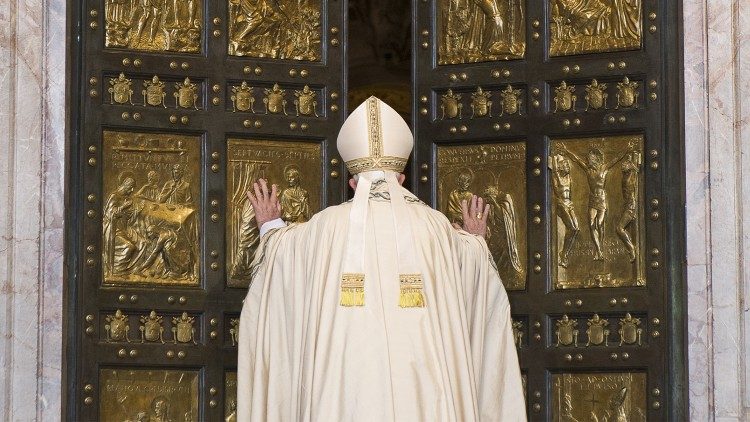
【LETTER OF THE HOLY FATHER FRANCIS TO MSGR. RINO FISICHELLA, PRESIDENT OF THE PONTIFICAL COUNCIL FOR THE PROMOTION OF THE NEW EVANGELIZATION,
FOR THE JUBILEE 2025】
The Jubilee has always been an event of great spiritual, ecclesial, and social significance in the life of the Church. Ever since 1300, when Boniface VIII instituted the first Holy Year – initially celebrated every hundred years, then, following its biblical precedent, every fifty years, and finally every twenty-five years – God’s holy and faithful people has experienced this celebration as a special gift of grace, characterized by the forgiveness of sins and in particular by the indulgence, which is a full expression of the mercy of God. The faithful, frequently at the conclusion of a lengthy pilgrimage, draw from the spiritual treasury of the Church by passing through the Holy Door and venerating the relics of the Apostles Peter and Paul preserved in Roman basilicas. Down the centuries, millions upon millions of pilgrims have journeyed to these sacred places, bearing living witness to the faith professed in every age.
The Great Jubilee of the year 2000 ushered the Church into the third millennium of her history. Saint John Paul II had long awaited and greatly looked forward to that event, in the hope that all Christians, putting behind their historical divisions, could celebrate together the two thousandth anniversary of the birth of Jesus Christ, the Saviour of humanity. Now, as the first twenty-five years of the new century draw to a close, we are called to enter into a season of preparation that can enable the Christian people to experience the Holy Year in all its pastoral richness. A significant step on this journey was already taken with the celebration of the Extraordinary Jubilee of Mercy, which allowed us to appreciate anew all the power and tenderness of the Father’s merciful love, in order to become, in our turn, its witnesses.
In the last two years, not a single country has been unaffected by the sudden outbreak of an epidemic that made us experience first-hand not only the tragedy of dying alone, but also the uncertainty and fleetingness of existence, and in doing so, has changed our very way of life. Together with all our brothers and sisters, we Christians endured those hardships and limitations. Our churches remained closed, as did our schools, factories, offices, shops, and venues for recreation. All of us saw certain freedoms curtailed, while the pandemic generated feelings not only of grief, but also, at times, of doubt, fear and disorientation. The scientific community quickly developed an initial remedy that is gradually permitting us to resume our daily lives. We are fully confident that the epidemic will be overcome and that the world will return to its usual pattern of personal relationships and social life. This will happen more readily to the extent that we can demonstrate effective solidarity, so that our neighbours most in need will not be neglected, and that everyone can have access to scientific breakthroughs and the necessary medicines.
We must fan the flame of hope that has been given us, and help everyone to gain new strength and certainty by looking to the future with an open spirit, a trusting heart and far-sighted vision. The forthcoming Jubilee can contribute greatly to restoring a climate of hope and trust as a prelude to the renewal and rebirth that we so urgently desire; that is why I have chosen as the motto of the Jubilee, Pilgrims of Hope. This will indeed be the case if we are capable of recovering a sense of universal fraternity and refuse to turn a blind eye to the tragedy of rampant poverty that prevents millions of men, women, young people and children from living in a manner worthy of our human dignity. Here I think in particular of the many refugees forced to abandon their native lands. May the voices of the poor be heard throughout this time of preparation for the Jubilee, which is meant to restore access to the fruits of the earth to everyone. As the Bible teaches, “The sabbath of the land shall provide food for you, for yourself and for your male and female slaves and for your hired servant and the sojourner who lives with you; for your cattle also, and for the beasts that are in your land, all its yield shall be for food” (Lev 25:6-7).
The spiritual dimension of the Jubilee, which calls for conversion, should also embrace these fundamental aspects of our life in society as part of a coherent whole. In the realization that all of us are pilgrims on this earth, which the Lord has charged us to till and keep (cf. Gen 2:15), may we never fail, in the course of our sojourn, to contemplate the beauty of creation and care for our common home. It is my hope that the coming Jubilee Year will be celebrated and experienced with this intention too. Growing numbers of men and women, including many young people and children, have come to realize that care for creation is an essential expression of our faith in God and our obedience to his will.
To you, dear Brother, I entrust responsibility for finding suitable ways for the Holy Year to be planned and celebrated with deep faith, lively hope and active charity. The Dicastery charged with promoting the new evangelization can help make this season of grace a significant stimulus to the pastoral outreach of the particular Churches, both Latin and Eastern, which are called in these years to intensify their commitment to synodality. In this regard, our pilgrimage towards the Jubilee will express and confirm the shared journey that the Church is called to make, in order to be ever more fully a sign and instrument of unity in harmonious diversity. It will be important to foster a renewed awareness of the demands of the universal call to responsible participation by enhancing the charisms and ministries that the Holy Spirit never ceases to bestow for the building up of the one Church. The four Constitutions of the Second Vatican Ecumenical Council, together with the Magisterium of these recent decades, will continue to provide direction and guidance to God’s holy people, so that it can press forward in its mission of bringing the joyful proclamation of the Gospel to everyone.
As is customary, the Bull of Indiction, to be issued in due course, will contain the necessary guidelines for celebrating the Jubilee of 2025. In this time of preparation, I would greatly desire that we devote 2024, the year preceding the Jubilee event, to a great “symphony” of prayer. Prayer, above all else, to renew our desire to be in the presence of the Lord, to listen to him and to adore him. Prayer, moreover, to thank God for the many gifts of his love for us and to praise his work in creation, which summons everyone to respect it and to take concrete and responsible steps to protect it. Prayer as the expression of a single “heart and soul” (cf. Acts 4:32), which then translates into solidarity and the sharing of our daily bread. Prayer that makes it possible for every man and woman in this world to turn to the one God and to reveal to him what lies hidden in the depths of their heart. Prayer as the royal road to holiness, which enables us to be contemplative even in the midst of activity. In a word, may it be an intense year of prayer in which hearts are opened to receive the outpouring of God’s grace and to make the “Our Father,” the prayer Jesus taught us, the life programme of each of his disciples.
I ask the Blessed Virgin Mary to accompany the Church on the journey of preparation for the grace-filled event of the Jubilee, and to you and your co-workers, with gratitude, I cordially send my Blessing.
Rome, Saint John Lateran, 11 February 2022, Memorial of the Blessed Virgin Mary of Lourdes. FRANCIS
教皇庁新福音化推進評議会議長 サルバトーレ(リノ)・フィジケラ大司教様
聖年は、教会生活において、つねに霊的、教会的、社会的に重要な出来事です。ボニファツィオ八世が1300年に最初の聖年を(100年の周期で——のちに聖書のモデルである50年に変更され、さらに25年に固定)制定して以来、信仰深い神の民は、この祝いを、罪の赦し、とくに神のいつくしみを十分に表現した免償によって特徴づけられる特別な恵みの賜物として経験してきました。信者は、通常、長い巡礼の旅の終わりに聖なる扉をくぐり、ローマの大聖堂に保存されている使徒ペトロとパウロの聖遺物を崇敬することによって、教会の霊的宝に触れます。何世紀もの間、何百万人もの巡礼者がこれらの聖なる場所を訪れ、堅固な信仰の生きた証しとなってきました。
2000年の大聖年によって、教会はその歴史の中の第3の千年期を始めました。聖ヨハネ・パウロ二世教皇は、歴史的分裂を乗り越えたすべてのキリスト者が、人類の救い主であるイエス・キリストの生誕2千年をともに祝うことができるように、と願い、切望していたのです。
21世紀の最初の25年目が近づくにあたり、キリスト者がこの聖なる年をその司牧的意義のすべてにおいて生きることができるような準備を開始するよう、私たちは求められています。この点で、重要なステップは「慈しみの特別聖年」でした。この聖年によって、私たちは御父のあわれみ深い愛の力と優しさを十全に再発見し、それによって今度は私たちが御父の証人となることができるようになりました。
しかし、この2年間、予期せぬ新型コロナウィルスの大感染に見舞われなかった国はなく、それによって孤独死という悲劇、存在の不確かさ、はかなさを見せつけられたことに加え、私たちの生き方も変えられてしまったのです。キリスト者である私たちは、兄弟姉妹とともに同じ苦しみや限界を乗り越えてきました。
学校、工場、オフィス、店舗、余暇の空間と同様に、私たちの教会も閉鎖されました。私たちは皆、いくつかの自由を制限され、パンデミックは、痛みに加えて、ときにわたしたちの魂に、疑い、恐れ、困惑を呼び起こしました。科学者たちは、いち早く一次治療法を発見し、徐々に日常生活に戻れるようにしたのです。私たちは、このコロナ危機が克服され、世界が人間関係や社会生活のリズムを取り戻すと確信しています。最も不利な立場にある人々を放置することなく、科学の発見と必要な医薬品をすべての人に分け与えることができるよう、私たちが連帯して行動すれば、このことは容易に達成されるでしょう。
私たちは、与えられた希望の炎を燃やし続け、すべての人に、開かれた精神、信頼する心、広い視野をもって未来を見つめる力と確信を回復させるため、全力を尽くさなければなりません。来るべき聖年は、私たち全員が緊急性を感じている新たな再生のしるしとして、希望と自信に満ちたムードを再構築するために、大いに助けとなるでしょう。
こうした理由から、「希望の巡礼者」というテーマを選びました。もし私たちが全世界に広がる同胞意識を取り戻すことができれば、そして何百万人もの男女、若者、子どもたちが人間らしく尊厳をもって生きることを妨げている、蔓延する貧困の悲劇に目を閉ざさなければ、これはすべて可能でしょう。とくに、自分の土地を離れることを余儀なくされている多くの難民のことを考えています。
聖書の命令に従って、すべての人が大地の実りを手にすることができるように回復する「安息の年(聖年)」への準備のこの時期に、どうか貧しい人々の声が聞き届けられますように。「安息の年に畑に生じたものはあなたたちの食物となる。あなたをはじめ、あなたの男女の奴隷、雇い人やあなたのもとに宿っている滞在者、更にはあなたの家畜や野生の動物のために、地の産物はすべて食物となる」(レビ25・6—7)。
したがって、私たちを回心へと導く聖年の霊的側面は、社会生活のこうした基本的側面と結びついて、首尾一貫した全体を形成しなければなりません。私たちは皆、自分は巡礼者であり、この地を耕し、世話するように主が連れてこられたのだと感じています(創世記2・15参照)。その道中、被造界の美を観想し、私たちの共通の家を世話することを怠ってはなりません。来るべき聖年も、このような意図をもって祝われ、体験されるよう願っています。実際、多くの若者や青少年を含む多くの人々は、被造界へのいたわりが「神への信仰と神のみ旨への従順さの本質的な表現」であることを理解しています。
私は、聖年が、熱心な信仰、生きた希望、実践的な愛をもって準備され祝われるために適切な方法を見出す責任を、親愛なる兄弟である大司教様にゆだねます。新福音化推進評議会は、この恵みの時を、この数年間にシノドスへの取り組みを強化するよう求められているラテン典礼と東方典礼両方の部分教会の司牧のための重要な行程とする方法を知っているはずです。
この視点に立って、聖年に向けた巡礼によって、多様性の調和の中で一致のしるしと道具となるために、教会が従うよう求められている共通の道は強められ、明らかにされるでしょう。一つの教会を築き上げるために聖霊が絶えず与えてくださるカリスマと奉仕職に感謝しつつ、責任ある参加を全世界に呼びかける要請を再発見できるよう助けることが重要でしょう。第二バチカン公会議の四つの憲章は、この数十年間の教導権とともに、聖なる神の民を方向づけ、導き続け、すべての人に喜びに満ちた福音を告げ知らせるという使命を発展させるでしょう。
慣例に従って、後日発行される大勅書には、2025年の聖年を祝うのに必要な指示が含まれます。この準備の時期に、聖年の行事に先立つ2024年を、偉大な祈りの「響き合い」に捧げることができると思うと。うれしい限りです。何よりもまず、主の前に立ち、主の声を聴き、主を崇める、という願いを回復する祈り。私たちに対する神の愛からの多くの賜物に感謝し、創造のわざを讃えるために、被造界を尊重し、保護するために、具体的、かつ責任ある行動をとることを約束する祈り。連帯し、日々の糧を分かち合うことに還元される、「心も思いも一つにした」(使徒言行録4・32参照)声としての祈り。この世のすべての人が唯一の神に向かい、心の奥底にあるものを神に表現できるようにするための祈り。聖性への大通りとして、私たちを行動において観想を生きるよう導く祈り。言い換えれば、熱心に祈る一年とし、豊かな恵みを受け取るために心を開き、イエスが教えてくださった「主の祈り」を、弟子たち一人ひとりの人生のプログラムとするのです。
聖母マリアに、聖年という恵みのときに向けた準備の道を教会とともに歩んでくださるよう願い、感謝とともに、大司教様とその協力者に心からの祝福を送ります。
 バチカンが1億7500万ユーロの損失を出して売却したロンドン、スローン・アベニューの不動産 (Photo by REUTERS/John Sibley)
Read more at: https://international.la-croix.com/news/religion/vatican-sells-london-property-linked-to-cardinal-becciu-saga/15568
Crux is dedicated to smart, wired and independent reporting on the Vatican and worldwide Catholic Church. That kind of reporting doesn’t come cheap, and we need your support. You can help Crux by giving a small amount monthly, or with a onetime gift. Please remember, Crux is a for-profit organization, so contributions are not tax-deductible.
