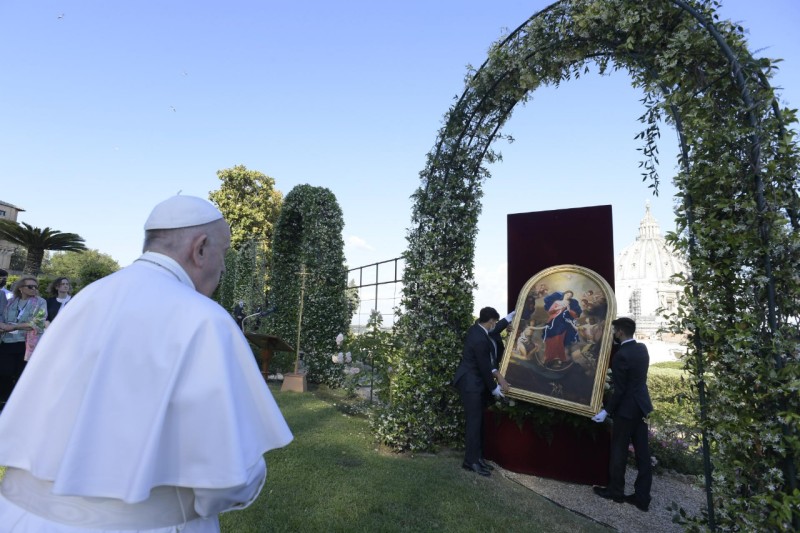
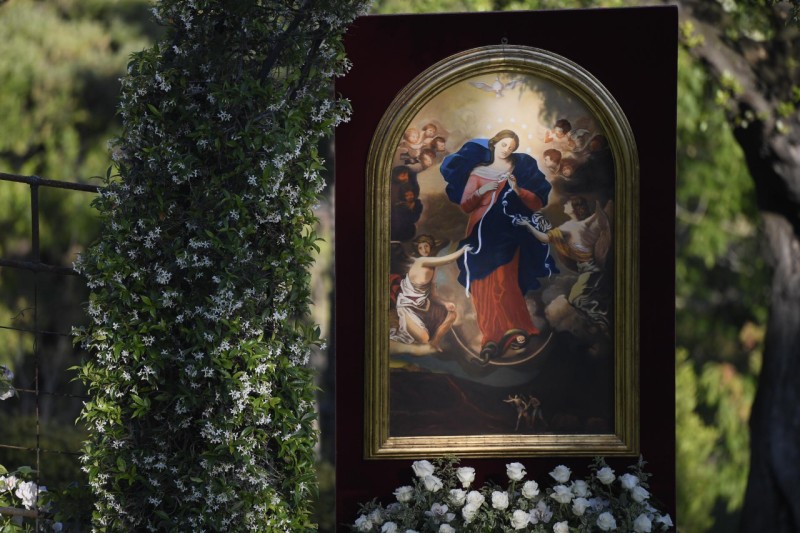
Notre Dame de Boulogne in France; Our Lady of Schoenstatt in Germany; Our Lady of Sorrows in Rwanda; the National Shrine of Maipú in Chile; Nuestra Senora de Os Gozos in Spain; the Shrine of Our Lady of Lourdes in Carfin, Scotland; the Basilica Shrine of La Virgen de los Milagros de Caacupé in Paraguay; and the parish sanctuary of Our Lady of Health in La Spezia, Italy。
「For a synodal Church: communion, participation and mission(共働する教会へー交わり、参加、そして使命=バチカン放送仮訳は「シノドス性ある教会のために:交わり、参加、ミッション」)をテーマとする世界代表司教会議(シノドス)の第十六回通常総会は10月9、10両日のミサなど”開会式”で事実上開始されるが、今回は、一度の会議に留まらず、2023年10月まで、教区、五大陸、世界の3つの段階で3年にわたる、世界の司教、司祭、信徒が参加する”シノドス(ギリシャ語で「共に歩む」)の旅”という異例の形をとることになる。
“For a synodal Church: communion, participation and mission” XVI Ordinary General Assembly of the Synod of Bishops
Presentation of the Programme for the celebration of the upcoming Synod approved by Pope Francis during his audience with Cardinal Secretary General of the Synod of Bishops, 24 April 2021.
1. “It is precisely this path of synodality which God expects of the Church of the third millennium. What the Lord is asking of us is already in some sense present in the very word ‘synod.’ Journeying together — laity, pastors, the Bishop of Rome — is an easy concept to put into words, but not so easy to put into practice.” (Address of His Holiness, Pope Francis, Ceremony Commemorating the 50th anniversary of the institution of the Synod of Bishops, 17 October 2015). For this reason, the theme of the next Ordinary General Assembly of the Synod of Bishops is, For a Synodal Church: communion, participation and mission.
2. Indeed, synodality refers to the very essence of the Church, her constitutive reality, and is thus oriented towards evangelization. It is an ecclesial way of being and a prophetic example for today’s world. “For just as the body is one and has many members, and all the members of the body, though many are one body, so it is with Christ.” (1 Cor 12:12). In a similar way, Augustine speaks of the Whole Christ (cf. Sermon 341), head and members who form an indivisible and inseparable unity. Only in union with Christ the head, is it possible to understand the plurality of the members of the body, which enriches the Church, overcoming any temptation to uniformity. Since this is a unity in plurality in the power of the Spirit, the Church is called to open new paths whilst embarking on that same journey.
3. The Synod of Bishops is the dynamic point of convergence that calls for mutual listening to the Holy Spirit at every level of the Church’s life (cf. Address of His Holiness, Pope Francis, Ceremony Commemorating the 50th anniversary of the institution of the Synod of Bishops, 17 October 2015). It is not just an event, but also a process that involves in synergy the People of God, the College of Bishops and the Bishop of Rome, each according to their proper function (cf. Address by Cardinal Mario Grech to the Holy Father in the Consistory for the creation of new cardinals, November 28, 2020).
PROMGRAMME FOR THE CELEBRATION OF THE SYNOD
4. Considering that the local churches, in which and from which the one and only Catholic Church exists, contribute effectively to the good of the entire mystical body, which is also the body of the churches (cf. Lumen Gentium 23), the fullness of the synodal process can only truly exist if the local churches are involved that process. For a genuine participation of the local churches, there also must be the involvement of other ecclesial bodies in this process, such as, the Synods of the Eastern Catholic Churches, the Councils and Assemblies of the Churches sui iuris,and Episcopal Conferences, with their own national, regional, and continental entities.
5. This synodal journey will begin with a solemn opening and consist of three phases:
5.1. OPENING OF THE SYNOD: October 2021
This synodal journey will commence both in the Vatican and in the local churches.
5.1.1. Official Opening with the Holy Father in the Vatican: 9-10 October 2021.
a. Opening session and time for reflection
b. Liturgical prayers and celebration of the Eucharist
5.1.2. Official Opening in each local church: Sunday 17 October 2021.
The local diocesan bishop will celebrate the same programme:
a. Opening session and time for reflection
b. Liturgical prayers and celebration of the Eucharist
5.2. PHASE IN THE LOCAL CHURCHES AND OTHER ECCLESIAL REALITIES: October 2021-April 2022
The objective of this phase is to consult the People of God (cf. Episcopalis Communio, 5,2) so that the synodal process is carried out through listening to all of the baptised, who are the subject of the sensus fidei – infallible – in credendo.
The following program will facilitate the consultation and participation of all.
GENERAL SECRETARIAT FOR THE SYNOD OF BISHOPS:
5.2.1. The General Secretariat for the Synod of Bishops will send a Preparatory Document, accompanied by a Questionnaire and a Vademecum with proposals for consultation in each local church.
5.2.2. The Dicasteries of the Roman Curia, the Union of Superiors General – International Union Superiors General (USG – UISG) and other Unions and Federations of Consecrated life, international lay movements, and University – Faculties of Theology will also receive this Questionnaire and Vademecum.
LOCAL CHURCHES AND EPISCOPAL CONFERENCES OR CORRESPONDING BODIES:
5.2.3. Each bishop will appoint a diocesan contact person (team) for the synodal consultation; they shall be a point of reference and link with the Episcopal Conference. They will accompany all the stages of the consultation process in the local church. (Before October 2021)
5.2.4. Each Episcopal Conference (or corresponding body) will also appoint a contact person responsible for liaising with both diocesan officials and with the General Secretariat for the Synod of Bishops. (Before October 2021)
LOCAL CHURCHES:
5.2.5. Consultation in the local churches will include those groups of participation as envisioned in Episcopalis Communio, without excluding other modalities deemed appropriate for the consultation to be real and effective (cf. Episcopalis Communio, 6).
5.2.6. Consultation with the People of God in each local church will conclude with a pre-synodal meeting, which will be the culmination of diocesan discernment.
5.2.7. At the conclusion of the diocesan phase, each local church will submit their contributions to their Episcopal Conference on a date determined by the Episcopal Conference itself. The Eastern Churches will submit their contributions to their corresponding bodies.
EPISCOPAL CONFERENCES OR CORRESPONDING BODIES:
5.2.8. A period of discernment will begin for bishops gathered in an assembly (Episcopal Conference). They will listen to what the Spirit has inspired in the churches entrusted to them.
5.2.9. Participants in the discernment period and the drafting of the synthesis include the contact person of the Episcopal Conference with regard to the synodal process and their team, as well as those representatives elected to participate in the Ordinary General Assembly of the Synod, following their ratification by the Holy Father.
5.2.10. This synthesis will be sent to the General Secretariat for the Synod of Bishops along with the contributions of each of the local churches. (Before April 2022)
OTHER CONTRIBUTIONS:
5.2.11. The Dicasteries of the Roman Curia, the University – Faculties of Theology, the Union of Superiors General – International Union Superiors General (USG – UISG) and other Unions and Federations of Consecrated life, and international lay movements, shall also provide their own contributions to the General Secretariat of the Synod of Bishops. (Before April 2022)
GENERAL SECRETARIAT FOR THE SYNOD OF BISHOPS:
5.2.12. The General Secretariat for the Synod of Bishops will proceed with the drafting of the first Instrumentum Laboris. (Before September of 2022)
5.3. CONTINENTAL PHASE: September 2022 – March 2023
The purpose of this phase is to promote dialogue at the continental level about the text of the first Instrumentum Laboris and deepen discernment within the specific cultural context of each continent.
GENERAL SECRETARIAT FOR THE SYNOD OF BISHOPS:
5.3.1. The General Secretariat for the Synod of Bishops will publish and send the first Instrumentum Laboris. (September of 2022)
INTERNATIONAL REUNIONS OF EPISCOPAL CONFERENCES:
5.3.2. Each International Reunion of Episcopal Conferences will also appoint a contact person to liaise with both the Episcopal Conferences and the General Secretariat for the Synod of Bishops. (Before September 2022)
5.3.3. Pre-synodal discernment in the continental Assemblies. The criteria for the participation of the residential bishops and other members of the People of God is to be established.
5.3.4. The Assemblies will conclude with the drafting of a final document to be sent to the General Secretariat for the Synod of Bishops. (March 2023)
OTHER CONTRIBUTIONS:
5.3.5. At the same time as the pre-synod meetings at the continental level, it is recommended that international assemblies of specialists also be held, who may send their contributions to the General Secretariat of the Synod. (March 2023)
GENERAL SECRETARIAT OF THE SYNOD:
5.3.6. The General Secretariat for the Synod of Bishops will proceed to draft the second Instrumentum Laboris. (Before June 2023)
5.4. UNIVERSAL CHURCH PHASE: October 2023
5.4.1. The General Secretariat for the Synod of Bishops will send the second Instrumentum Laboris to the participants of the General Assembly of the Synod of Bishops.
5.4.2. Celebration of the Synod of Bishops will take place in Rome according to the norms established in the Apostolic Constitution Episcopalis Communio. (October 2023)
*******
6. The articulation of the different phases of the synodal process makes possible a real listening to the People of God including all bishops at the different levels of ecclesial life (local churches, Episcopal Conferences or corresponding bodies, and International Reunions of Episcopal Conferences). In this way, the participation of all in the synodal process is guaranteed and the exercise of collegiality is configured within the exercise of synodality, as emphasized by Pope Francis on the 50th anniversary of the institution of the Synod of Bishops.
7. In a spirit of collaboration, the General Secretariat of the Synod is open to clarify and accompany any moment of this synodal process, which must be, essentially, a spiritual event of discernment. “One listening to the others; and all listening to the Holy Spirit.”(Discourse of Pope Francis on the Commemoration of the 50th anniversary of the institution of the Synod of Bishops, 17 October 2015).
Mario Card. Grech General Secretary Vatican, 21 May 2021
英語訳で“Pastoral Guidelines for the Celebration of World Youth Day in the Particular Churches.”と題する指針書は、後者の「世界青年の日」が、これまでの「受難の主日」から、「王であるキリスト」の祭日に変更して記念されるようになった機会に、青年司牧の意義を改めて考えることを目的にしている。
Auxiliary Bishop Joseph Ha, Bishop Michael Yeung, and retired Cardinal John Tong concelebrate Mass May 24, 2018, on the feast of Our Lady, Help of Christians at the Cathedral of the Immaculate Conception in Hong Kong. Yeung died suddenly on Jan. 3, leaving the diocese vacant for the first time since it came under Chinese rule in 1997. (Credit: Francis Wong/CNS.)
Loving God,
Creator of heaven, earth and everything in it.
Open our minds and touch our hearts,
so that we can be part of creation, your gift.
Reach out to those in need during these difficult times,
especially the poorest and most vulnerable.
Help us show creative solidarity in dealing with
the consequences of this global pandemic.
Make us brave to embrace the changes aimed
at the common good.
Now more than ever, that we can feel that we are all
interconnected and interdependent.
Make it possible for us to listen and respond
to the cry of the earth and the cry of the poor.
May today’s suffering be the pain of childbirth
in a more fraternal and sustainable world.
Under the loving gaze of Mary Help of Christians,
we ask this through Christ our Lord.
APOSTOLIC LETTER ISSUED “MOTU PROPRIO” BY THE SUPREME PONTIFF
FRANCIS “ANTIQUUM MINISTERIUM”
INSTITUTING THE MINISTRY OF CATECHIST
1. The ministry of Catechist in the Church is an ancient one. Theologians commonly hold that the first examples are already present in the writings of the New Testament. The service of catechesis may be traced back to those “teachers” mentioned by the Apostle in writing to the community of Corinth: “Some people God has designated in the Church to be, first, apostles; second, prophets; third, teachers; then, mighty deeds; then, gifts of healing, assistance, administration, and varieties of tongues. Are all apostles? Are all prophets? Are all teachers? Do all work mighty deeds? Do all have gifts of healing? Do all speak in tongues? Do all interpret? Strive eagerly for the greatest spiritual gifts. But I shall show you a still more excellent way” (1 Cor 12:28-31).
Saint Luke begins his Gospel by stating: “I too have decided, after investigating everything accurately anew, to write it down in an orderly sequence for you, most excellent Theophilus, so that you may realize the certainty of the teachings you have received” (Lk 1:3-4). The evangelist seems to be well aware that his writings offer a specific form of instruction that can give firm assurance to those already baptized. The Apostle Paul, for his part, tells the Galatians that: “one who is being instructed in the word should share all good things with his instructor” (Gal 6:6). As is evident, this text provides yet another detail; it speaks of the communion of life as a sign of the fruitfulness of an authentic catechesis.
2. From the beginning, the Christian community was characterized by many different forms of ministry carried out by men and women who, obedient to the working of the Holy Spirit, devoted their lives to the building up of the Church. At times, the charisms that the Spirit constantly pours out on the baptized took on a visible and tangible form of immediate service to the Christian community, one recognized as an indispensable diakonia for the community.
The Apostle Paul authoritatively attests to this when he states that “there are different kinds of spiritual gifts but the same Spirit; there are different forms of service but the same Lord; there are different workings but the same God who produces all of them in everyone. To each individual the manifestation of the Spirit is given for some benefit. To one is given through the Spirit the expression of wisdom; to another the expression of knowledge according to the same Spirit; to another faith by the same Spirit; to another gifts of healing by the one Spirit; to another mighty deeds; to another prophecy; to another discernment of spirits; to another varieties of tongues; to another interpretation of tongues. But one and the same Spirit produces all of these, distributing them individually to each person as he wishes” (1 Cor 12:4-11).
Within the broader charismatic tradition of the New Testament, then, we can see that certain baptized persons exercised the ministry of transmitting in a more organic and stable form related to different situations in life the teaching of the apostles and evangelists (cf. SECOND VATICAN ECUMENICAL COUNCIL, Dogmatic Constitution on Divine Revelation Dei Verbum, 8). The Church wished to acknowledge this service as a concrete expression of a personal charism that contributed greatly to the exercise of her mission of evangelization. This glance at the life of the first Christian communities engaged in the spread of the Gospel also encourages the Church in our day to appreciate possible new ways for her to remain faithful to the word of the Lord so that his Gospel can be preached to every creature.
3. The history of evangelization over the past two millennia clearly shows the effectiveness of the mission of catechists. Bishops, priests and deacons, together with many men and women in the consecrated life, devoted their lives to catechetical instruction so that the faith might be an effective support for the life of every human being. Some of them also gathered around themselves others of their brothers and sisters sharing the same charism, and founded religious orders wholly dedicated to catechesis.
Nor can we forget the countless lay men and women who directly took part in the spread of the Gospel through catechetical instruction. Men and women of deep faith, authentic witnesses of holiness, who in some cases were also founders of Churches and eventually died as martyrs. In our own day too, many competent and dedicated catechists are community leaders in various parts of the world and carry out a mission invaluable for the transmission and growth of the faith. The long line of blesseds, saints and martyrs who were catechists has significantly advanced the Church’s mission and deserves to be recognized, for it represents a rich resource not only for catechesis but also for the entire history of Christian spirituality.
4. Beginning with the Second Vatican Ecumenical Council, the Church has come to a renewed appreciation of the importance of lay involvement in the work of evangelization. The Council Fathers repeatedly emphasized the great need for the lay faithful to be engaged directly, in the various ways their charism can be expressed, in the “plantatio Ecclesiae” and the development of the Christian community.
“Worthy of praise too is that army of catechists, both men and women, to whom missionary work among the nations is so indebted, who imbued with an apostolic spirit make an outstanding and absolutely necessary contribution to the spread of the faith and the Church by their great work. In our days, when there are so few clerics to evangelize such great multitudes and to carry out the pastoral ministry, the role of catechists is of the highest importance” (cf. SECOND VATICAN ECUMENICAL COUNCIL, Decree on the Church’s Missionary Activity Ad Gentes, 17).
Along with the important teaching of the Council, mention should be made of the constant interest of the Popes, the Synod of Bishops, the Episcopal Conferences and individual Bishops who, in recent decades have contributed to a significant renewal of catechesis. The Catechism of the Catholic Church, the Apostolic Exhortation Catechesi Tradendae, the General Catechetical Directory, theGeneral Directory for Catechesis and the recent Directory for Catechesis, as well as the many national, regional and diocesan Catechisms, have confirmed the centrality of a catechesis that gives priority to the education and ongoing formation of believers.
5. Without prejudice to the Bishop’s mission as the primary catechist in his Diocese, one which he shares with his presbyterate, or to the particular responsibility of parents for the Christian formation of their children (cf. CIC can. 774 §2; CCEO can. 618), recognition should be given to those lay men and women who feel called by virtue of their baptism to cooperate in the work of catechesis (cf. CIC can. 225; CCEO cans. 401 and 406).
This presence is all the more urgently needed today as a result of our increasing awareness of the need for evangelization in the contemporary world (cf. Apostolic Exhortation Evangelii Gaudium, 163-168), and the rise of a globalized culture (cf. Encyclical Letter Fratelli Tutti, 100, 138). This requires genuine interaction with young people, to say nothing of the need for creative methodologies and resources capable of adapting the proclamation of the Gospel to the missionary transformation that the Church has undertaken. Fidelity to the past and responsibility for the present are necessary conditions for the Church to carry out her mission in the world.
Awakening personal enthusiasm on the part of all the baptized and reviving the awareness of their call to carry out a proper mission in the community demands attentiveness to the voice of the Spirit, who is unfailingly present and fruitful (cf. CIC can. 774 §1; CCEO can. 617). Today, too, the Spirit is calling men and women to set out and encounter all those who are waiting to discover the beauty, goodness, and truth of the Christian faith. It is the task of pastors to support them in this process and to enrich the life of the Christian community through the recognition of lay ministries capable of contributing to the transformation of society through the “penetration of Christian values into the social, political and economic sectors” (Evangelii Gaudium, 102).
6. The lay apostolate is unquestionably “secular”. It requires that the laity “seek the kingdom of God by engaging in temporal affairs and directing them according to God’s will” (cf. SECOND VATICAN ECUMENICAL COUNCIL Dogmatic Constitution on the Church Lumen Gentium, 31).
In their daily life, interwoven with family and social relationships, the laity come to realize that they “are given this special vocation: to make the Church present and fruitful in those places and circumstances where it is only through them that she can become the salt of the earth” (ibid., 33).
We do well to remember, however, that in addition to this apostolate, “the laity can be called in different ways to more immediate cooperation in the apostolate of the hierarchy, like those men and women who helped the apostle Paul in the Gospel, working hard in the Lord” (ibid.).
The role played by catechists is one specific form of service among others within the Christian community. Catechists are called first to be expert in the pastoral service of transmitting the faith as it develops through its different stages from the initial proclamation of the kerygma to the instruction that presents our new life in Christ and prepares for the sacraments of Christian initiation, and then to the ongoing formation that can allow each person to give an accounting of the hope within them (cf. 1 Pet 3:15).
At the same time, every catechist must be a witness to the faith, a teacher and mystagogue, a companion and pedagogue, who teaches for the Church. Only through prayer, study, and direct participation in the life of the community can they grow in this identity and the integrity and responsibility that it entails (cf. Pontifical Council for the Promotion of the New Evangelization, Directory for Catechesis, 113).
7. With great foresight, Saint Paul VI issued the Apostolic Letter Ministeria Quaedam with the intention not only of adapting the ministries of Lector and Acolyte to changed historical circumstances (cf. Apostolic Letter Spiritus Domini), but also of encouraging Episcopal Conferences to promote other ministries, including that of Catechist.
“In addition to the ministries common to the entire Latin Church, nothing prevents Episcopal Conferences from asking the Apostolic See for the institution of others, which for particular reasons, they consider necessary or very useful in their own region. Among these are, for example, the offices of Porter, Exorcist and Catechist.” The same pressing invitation is found in the Apostolic Exhortation Evangelii Nuntiandi; in calling for a discernment of the present needs of the Christian community in faithful continuity with its origins, the Pope encouraged the development of new forms of ministry for a renewed pastoral activity.
“Such ministries, apparently new but closely tied up with the Church’s living experience down the centuries, such as that of catechists… are valuable for the establishment, life, and growth of the Church, and for her capacity to influence her surroundings and to reach those who are remote from her” (SAINT PAUL VI, Apostolic Exhortation Evangelii Nuntiandi, 73).
To be sure, “there has been a growing awareness of the identity and mission of the laity in the Church. We can indeed count on many lay persons, although still not nearly enough, who have a deeply-rooted sense of community and great fidelity to the tasks of charity, catechesis and the celebration of the faith” (Evangelii Gaudium, 102).
It follows that the reception of a lay ministry such as that of Catechist will emphasize even more the missionary commitment proper to every baptized person, a commitment that must however be carried out in a fully “secular” manner, avoiding any form of clericalization.
8. This ministry has a definite vocational aspect, as evidenced by the Rite of Institution, and consequently calls for due discernment on the part of the Bishop. It is in fact a stable form of service rendered to the local Church in accordance with pastoral needs identified by the local Ordinary, yet one carried out as a work of the laity, as demanded by the very nature of the ministry.
It is fitting that those called to the instituted ministry of Catechist be men and women of deep faith and human maturity, active participants in the life of the Christian community, capable of welcoming others, being generous and living a life of fraternal communion. They should also receive suitable biblical, theological, pastoral and pedagogical formation to be competent communicators of the truth of the faith and they should have some prior experience of catechesis (cf. SECOND VATICAN ECUMENICAL COUNCIL, Decree on the Pastoral Office of Bishops in the Church Christus Dominus, 14; CIC can. 231 §1; CCEO can. 409 §1).
It is essential that they be faithful co-workers with priests and deacons, prepared to exercise their ministry wherever it may prove necessary, and motivated by true apostolic enthusiasm.
Therefore, after having taken all things into consideration, and by apostolic authority I establish the lay ministry of Catechist
The Congregation for Divine Worship and the Discipline of the Sacraments will soon publish the Rite of Institution of the lay ministry of Catechist.
9. I invite the Episcopal Conferences to render effective the ministry of Catechist, determining the necessary process of formation and the normative criteria for admission to this ministry and devising the most appropriate forms for the service which these men and women will be called to exercise in conformity with the content of this Apostolic Letter.
10. The Synods of the Oriental Churches or the Assemblies of Hierarchs may adopt what is established here for their respective Churches sui iuris, in accordance with their particular law.
11. Bishops should make every effort to comply with the exhortation of the Council Fathers: “Pastors… know that they were not established by Christ to undertake by themselves the entire saving mission of the Church to the world. They appreciate, rather, that it is their exalted task to shepherd the faithful and at the same time acknowledge their ministries and charisms so that all in their separate ways, but of one mind, may cooperate in the common task” (Lumen Gentium, 30). May the discernment of the gifts that the Holy Spirit never fails to grant to the Church sustain their efforts to make the lay ministry of Catechist effective for the growth of their communities.
I order that what has been laid down by this Apostolic Letter issued “Motu Proprio” have firm and stable effect, anything to the contrary notwithstanding, even if worthy of special mention, and that it be promulgated by publication in L’Osservatore Romano, taking effect that same day, and published thereafter in the official commentary of the Acta Apostolicae Sedis.
Given in Rome, at Saint John Lateran, on the tenth day of May in the year 2021, the liturgical memorial of Saint John of Avila, Priest and Doctor of the Church, the ninth of my Pontificate.
LA CROIX international is the premier online Catholic daily providing unique quality content about topics that matter in the world such as politics, society, religion, culture, education and ethics. for post-Vatican II Catholics and those who are passionate about how the living Christian tradition engages, shapes and makes sense of the burning issues of the day in our rapidly changing world. Inspired by the reforming vision of the Second Vatican Council, LCI offers news, commentary and analysis on the Church in the World and the world of the Church. LA CROIX is Europe’s pre-eminent Catholic daily providing quality journalism on world events, politics, science, culture, technology, economy and much more. La CROIX which first appeared as a daily newspaper in 1883 is a highly respected and world leading, independent Catholic daily.

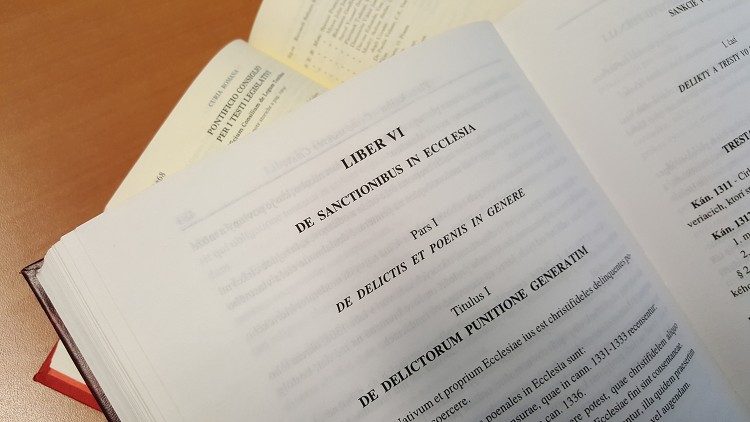 教会法典「第6集」