Crux is dedicated to smart, wired and independent reporting on the Vatican and worldwide Catholic Church. That kind of reporting doesn’t come cheap, and we need your support. You can help Crux by giving a small amount monthly, or with a onetime gift. Please remember, Crux is a for-profit organization, so contributions are not tax-deductible.
Joseph Tulloch, Vatican News: What is your initial reaction to the COP final document?
Professor Joachim von Braun, President of the Pontifical Academy of Sciences: COP28 experienced a lot of global attention, so the expectations were high. I must say my expectations were not as high, having been around on the campus in Dubai. But I’m all in all pleasantly surprised about the final outcome document.
I was reading earlier a statement from CAFOD, the UK branch of Caritas, which said that the Pope “may be disappointed” by the outcome, because he had pushed for stronger action. Do you think that’s accurate?
If we look at the statement of Pope Francis that was presented at the beginning of COP28, we see a significant congruence with some key points in the outcome document. Pope Francis had asked for phasing out carbon emissions related to coal, oil, and gas. Well, the formulations there are softer, and that’s why disappointment is appropriate. But for the first time, “phasing down”, that’s a formulation in the outcome document, the so-called ‘stock-taking document’ to be formal, and it’s a breakthrough.
And the focus on transition to Net Zero carbon emissions by 2050 is also new. We would have wished for an end to coal and an end to gas and an end to oil by 2050, as was also the wish of Pope Francis.
Our interview with Joachim von Braun
Another theme that’s important to the Holy See is help for poorer countries, which are not the leading cause of climate change, but will suffer the majority of the consequences. I’m wondering if you have any thoughts about the steps that were taken towards a Loss and Damage fund for poorer countries.
The address by Pope Francis had a call for a focus on poverty, respect for indigenous peoples, a focus on food and agriculture and water, resilience and sustainability. These topics we find in the outcome document. However, not strongly enough.
The idea is that we move to climate justice by transferring more resources to low-income countries where climate change – the climate crisis, I would say – shows the biggest impact. These resources are too small, still too small. There are improvements in climate finance – 90 billion are currently on the table, with the idea to double these climate finance resources in the coming years. The Green Climate Fund also got more resources, 12 billion.
But the problem is the focus on the poor would require a lot more finance for climate adaptation and that’s not yet happening. For instance, in the critical sector of food system and agriculture there’s only 4% of climate finance and that matters most for the poor.
We’re talking about the Pope’s message, and the Holy See’s message, but as we know the Pope wasn’t able to be there in person for health reasons, and I’m wondering what difference you think that made to the Pope’s message and to the Holy See’s diplomacy at this COP?
I think it was properly recognized that Pope Francis couldn’t come for health reasons. He was there in spirit, and the voice of Cardinal Parolin, Secretary of State, got a lot of attention. I think that was appropriately recognized.
And, by the way, there was a faith pavilion on the campus right in the middle of it, which I also visited, and interacted with some of the delegates there. So the idea which we had promoted here from the Vatican’s Academy of Sciences, namely the dialogues between science and faith for climate change, does continue, and that process must continue in the future. We will engage in that.
We had on the table here a moment ago a statement produced by your Academy, and I was wondering if you could tell me a little bit about that?
The Pontifical Academy of Sciences has been engaged in climate science matters and climate policy matters for about 10 years already. And in the run up to COP 28, the Academies of Science and Social Sciences came together and, building on a conference which we had last year, drafted a statement of our perspective, what needs to change at COP28.
Let me just highlight three points.
We ask for a new approach, which combines bending the warming curve, accelerating adaptation – so dealing with the acute climate crisis from the perspective of poor people, the bottom three billion – and investing in transforming our economic systems. The transformation includes also a focus on changing our consumption habits.
Secondly, we call for a broader inclusion of local communities. We cannot leave the climate policy agenda to heads of states and the COP process. So we call for a meeting of mayors and governors and local people and civil society and corporate actors for a conference which we plan next year in May here in the Vatican.
And thirdly, we ask for a much stronger focus on science and sharing science, because adaptation and dealing with climate risks also is a problem of climate change and health, and requires knowledge, science, education. The world scientific communities need to come together to share scientific insights with low-income countries in order to strengthen our capacity to deal with climate problems.
You said something about the Faith Pavilion at COP and some of your experience there. I believe I’m right in saying this is the first time there’s ever been a Faith Pavilion, and I wonder if there’s anything more you wanted to say about that?
In the preparation of this COP, faith communities came together and lobbied for a more significant positioning in the ‘market of opportunities’ of the COP. You can imagine that on the campus of Dubai, there are hundreds of organizations who present their thoughts, their technologies, and their concerns. Since the COP in Glasgow, so two years ago, faith-based communities have come together with science communities.
I think that’s the real novelty. It’s not just faith, it’s not just science, but it’s faith and science, articulating what needs to happen from a perspective of scientific insights and moral and ethical perspectives. The two must go together and there is some progress to be felt in this COP and the previous one.
It’s very impressive how inter-religious it is – there’s representation from many Christian denominations, from the Muslim Council of Elders, and so on …
That’s right. In the faith and science dialogues, we had top representatives of more than 30 world religions, so Christians, Muslims, Buddhists, Jain and what have you.
Why do they come together? Because they care for Earth – Mother Earth, some of them call it – and they care for the future of humanity.
Is there anything you want to add?
Maybe one more point. It is time to think fundamentally about the need for reform of the COP processes. These COP processes have played an important role, especially since the Paris Agreement, which articulated that we need to try to control global temperature increases at most to 1.5 degrees Celsius.
But we need much more action-oriented communities to come together. That requires local government, more inclusiveness of people who are affected, and forming coalitions of the willing. The complete consensus of 200 plus countries at these COPs makes consensus building too difficult. We have already lost too much time. And that’s why communities of science, faith, investment, corporate, government at different levels need to come to a governance reform on transforming climate policy.
APOSTOLIC LETTER IN THE FORM OF A “MOTU PROPRIO” OF THE SUPREME PONTIFF
FRANCIS Ad theologiam promovendam
BY WHICH NEW STATUTES OF THE PONTIFICAL ACADEMY OF THEOLOGY ARE APPROVED
1. In order to promote theology in the future, one cannot limit oneself to abstractly re-proposing formulas and schemes of the past. Called to prophetically interpret the present and to discern new paths for the future, in the light of Revelation, theology will have to confront profound cultural transformations, aware that: “What we are experiencing is not simply an era of change, but a change of epoch” (Address to the Roman Curia, 21 December 2013).
2. The Pontifical Academy of Theology, founded at the beginning of the eighteenth century under the auspices of Clement XI, my Predecessor, and canonically instituted by him with the brief Inscrutabili on 23 April 1718, in the course of its centuries-old existence has constantly embodied the need to place theology at the service of the Church and the world, modifying its structure when necessary and expanding its aims: from an initial place of theological formation for ecclesiastics in a context in which other institutions were lacking and inadequate for this purpose, to a group of scholars called to investigate and deepen theological themes of particular relevance. The updating of the Statutes, desired by my Predecessors, has marked and promoted this process: one thinks of the Statutes approved by Gregory XVI on 26 August 1838 and those approved by Saint John Paul II with the Apostolic Letter Inter munera Academiarum on 28 January 1999.
3. After almost five decades, the time has come to revise these norms, to make them more suited to the mission that our time imposes on theology. A synodal, missionary and “outgoing” Church can only correspond to an “outgoing” theology. As I wrote in my Letter to the Grand Chancellor of the Catholic University of Argentina, addressing professors and students of theology: “Do not be satisfied with a theology that is just a coffee table. Let your place of reflection be borders. […] Good theologians, like good pastors, also smell of the people and of the street and, with their reflection, pour oil and wine on the wounds of men.” Openness to the world, to man in the concreteness of his existential situation, with his problems, his wounds, his challenges, his potentialities, cannot, however, be reduced to a “tactical” attitude, extrinsically adapting contents that have now crystallized to new situations, but must urge theology to an epistemological and methodological rethinking, as indicated in the Preface to the Apostolic Constitution Veritatis Gaudium.
4. Theological reflection is therefore called to a turning point, to a paradigm shift, to a “courageous cultural revolution” (Encyclical Letter Laudato Si’, n. 114) that commits it, in the first place, to being a fundamentally contextual theology, capable of reading and interpreting the Gospel in the conditions in which men and women live daily, in different geographical environments, in different geographical contexts, in the same contexts, as in the context of the Gospel and having as its archetype the Incarnation of the eternal Logos, his entry into the culture, the vision of the world, the religious tradition of a people. From this point on, theology can only develop into a culture of dialogue and encounter between different traditions and different knowledge, between different Christian confessions and different religions, openly confronting everyone, believers and non-believers alike. The need for dialogue is in fact intrinsic to the human being and to the whole of creation, and it is the special task of theology to discover “the Trinitarian imprint which makes the cosmos in which we live ‘a web of relationships’ in which ‘it is proper to every living being to tend towards something else'” (Apostolic Constitution Veritatis Gaudium, Preface, 4a).
5. From the epistemic point of view, this relational dimension connotes and defines the status of theology, which is impelled not to close itself in self-referentiality, which leads to isolation and insignificance, but to perceive itself as part of a web of relationships, first of all with other disciplines and other forms of knowledge. It is the approach of transdisciplinarity, that is, interdisciplinarity in the strong sense, distinct from multidisciplinarity, understood as interdisciplinarity in the weak sense. The latter certainly favors a better understanding of the object of study by considering it from several points of view, which nevertheless remain complementary and separate. Transdisciplinarity, on the other hand, must be thought of “as the placement and fermentation of all knowledge within the space of Light and Life offered by the Wisdom that emanates from the Revelation of God” (Apostolic Constitution Veritatis Gaudium, Preface, 4c). Hence the arduous task for theology to be able to make use of new categories elaborated by other fields of knowledge, to penetrate and communicate the truths of the faith and to transmit the teaching of Jesus in today’s languages, with originality and critical awareness.
6. Dialogue with other fields of knowledge obviously presupposes dialogue within the ecclesial community and an awareness of the essential synodal and communion dimension of doing theology: the theologian cannot but live fraternity and communion in the first person, at the service of evangelization and in order to reach the hearts of all. As I said to theologians in my Address to the Members of the International Theological Commission on 24 November 2022: “Ecclesial synodality therefore commits theologians to do theology in a synodal form, promoting among them the ability to listen, dialogue, discern and integrate the multiplicity and variety of requests and contributions”. It is therefore important that there be places, including institutional ones, in which to live and experience collegiality and theological fraternity.
7. Finally, the necessary attention to the scientific status of theology must not obscure its sapiential dimension, as Saint Thomas Aquinas clearly affirmed (cf. Summa theologiae I, q. 1, a. 6). For this reason, Blessed Antonio Rosmini considered theology a sublime expression of “intellectual charity”, while he asked that the critical reason of all knowledge be oriented towards the Idea of Wisdom. Now the Idea of Wisdom inwardly binds Truth and Charity together in a “solid circle”, so that it is impossible to know the truth without practicing charity: “For the one is in the other, and neither is found outside the other. Wherefore he who has this Truth has with it the Charity that fulfills it, and he who has this Charity has the Truth fulfilled” (cf. Of the Author’s Studies, nn.100-111). Scientific reason must broaden its boundaries in the direction of wisdom, so as not to become dehumanized and impoverished. In this way, theology can contribute to the current debate of “rethinking thought”, showing that it is a true critical knowledge as sapiential knowledge, not abstract and ideological, but spiritual, elaborated on one’s knees, pregnant with adoration and prayer; A transcendent knowledge and, at the same time, attentive to the voice of the peoples, therefore “popular” theology, mercifully addressed to the open wounds of humanity and creation and within the folds of human history, to which it prophesies the hope of an ultimate fulfilment.
8. This is the pastoral “tone” that theology as a whole, and not only in one of its particular areas, must assume: without opposing theory and practice, theological reflection is urged to develop with an inductive method, which starts from the different contexts and concrete situations in which peoples are inserted, allowing itself to be seriously challenged by reality, to become discernment of the “signs of the times” in the proclamation of the salvific event of the God-agape, communicated in Jesus Christ. For this reason, it is necessary that the knowledge of the common sense of the people be given priority first of all, which is in fact a theological place in which so many images of God dwell, often not corresponding to the Christian face of God, one and always love. Theology is placed at the service of the evangelization of the Church and the transmission of the faith, so that faith may become culture, that is, the wise ethos of the People of God, a proposal of human and humanizing beauty for all.
9. In the face of this renewed mission of theology, the Pontifical Academy of Theology is called to develop, with constant attention to the scientific nature of theological reflection, transdisciplinary dialogue with other scientific, philosophical, humanistic and artistic knowledge, with believers and non-believers, with men and women of different Christian confessions and different religions. This can be done by creating an academic community for the sharing of faith and study, which weaves a network of relationships with other formative, educational and cultural institutions and which is able to penetrate, with originality and a spirit of imagination, into the existential places of the elaboration of knowledge, of the professions and of Christian communities.
10. Thanks to the new Statutes, the Pontifical Academy of Theology will thus be able to pursue more easily the goals that the present time requires. Welcoming and supporting the wishes that have been made to me to approve these new norms, I desire that this eminent seat of study may increase in quality, and for this reason I approve, by virtue of this Apostolic Letter, and in perpetuity, the Statutes of the Pontifical Academy of Theology, legitimately drawn up and revised, and I confer on them the force of Apostolic approval.
All that I have decreed in this Apostolic Letter motu proprio da, I order to be of stable and lasting value, notwithstanding anything to the contrary.
Given in Rome, at Saint Peter’s, on 1 November in the year 2023, the Solemnity of All Saints, the eleventh of my Pontificate.
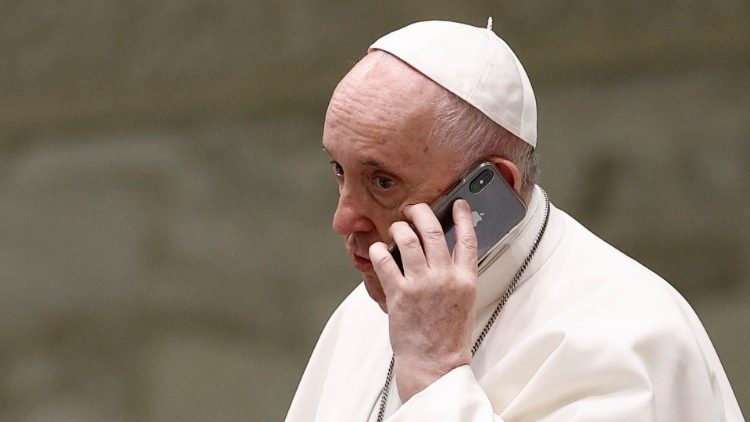
Today, President Joseph R. Biden spoke with His Holiness Pope Francis to discuss the latest developments in Israel and Gaza. The President condemned the barbarous attack by Hamas against Israeli civilians and affirmed the need to protect civilians in Gaza. He discussed his recent visit to Israel and his efforts to ensure delivery of food, medicine, and other humanitarian assistance to help alleviate the humanitarian crisis in Gaza. They also discussed the need to prevent escalation in the region and to work toward a durable peace in the Middle East.
 総額約1億8,000万ドルの資産没収と約2億2,000万ドルの損害賠償を行うよう命じた。 だがそれが実行されるためには、おそらくバチカンは、スイスや英国など被告たちの資産や資金が実際に置かれている国の協力を得る必要があるだろう。
 5年6か月の実刑、公職からの永久追放、そして8千ユーロの罰金の判決を言い渡したのを含めて被告10人に対する有罪判決を下した。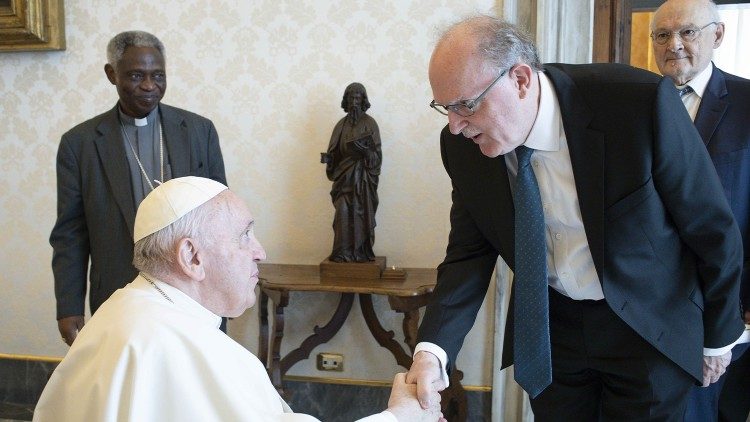

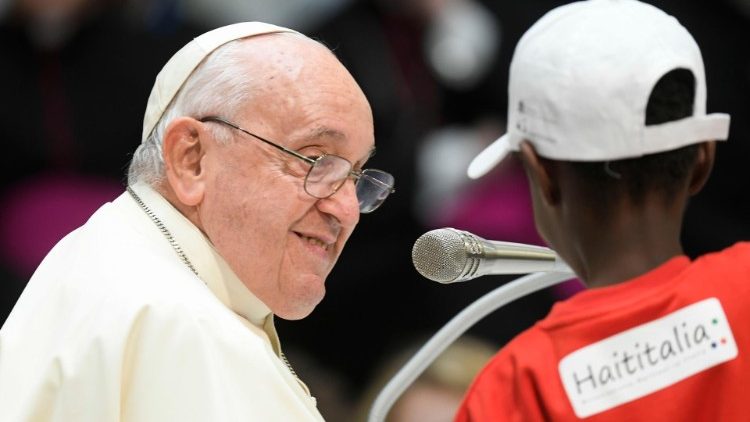
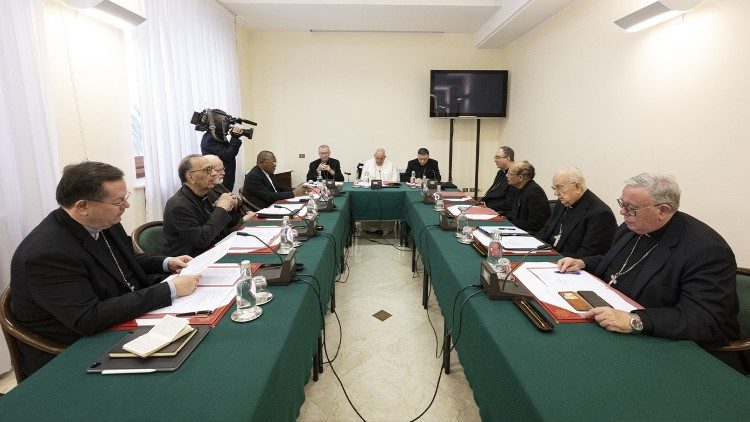
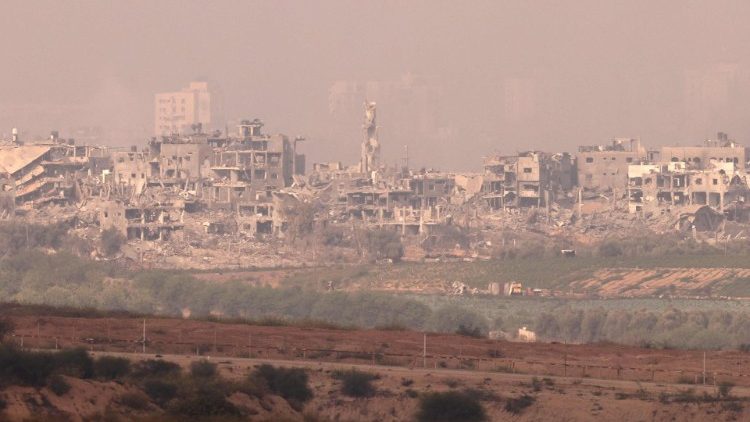
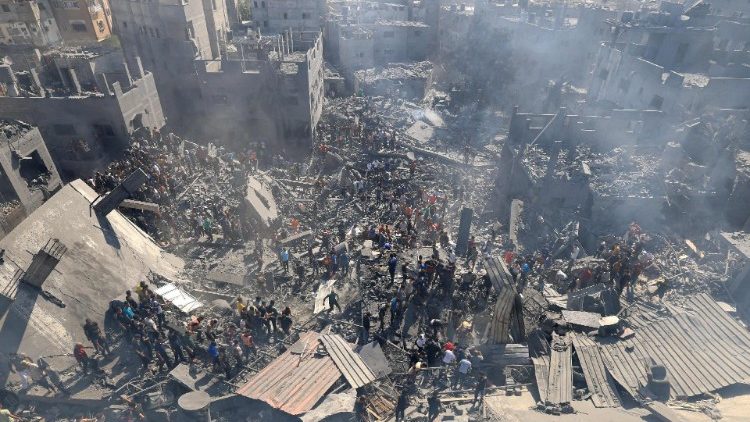
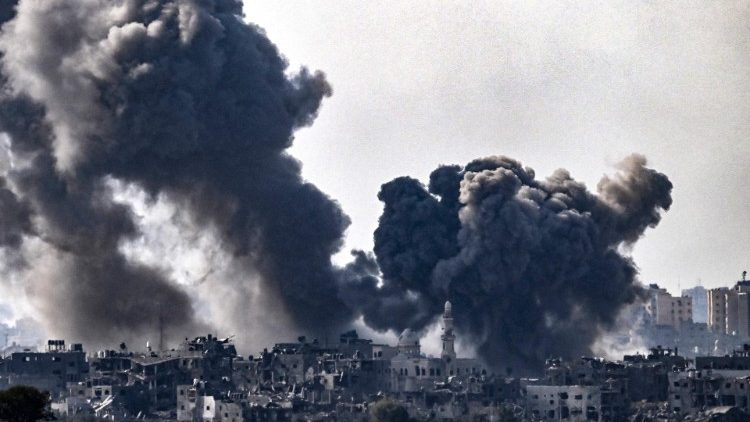
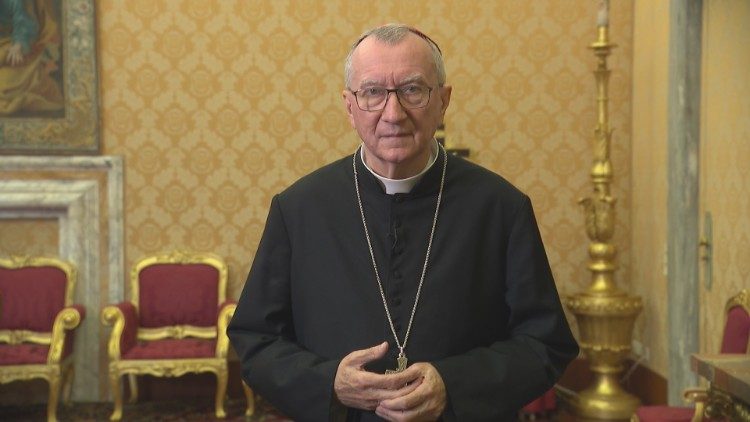 要です。攻撃された側が自らを守る権利がありますが、正当防衛は行きすぎてはなりません。イスラエルと武装組織ハマスの間にどのような対話の余地があるのかは分かりませんが、あるとすれば、そして、あることを願いますが、対話にすぐに取り掛かるべきです。これは、今、ガザ地区で起きている流血を防ぐためです。そこでは多くの無実の一般人がイスラエル軍の攻撃で犠牲になっています。