☩「世界的な不平等と紛争が続く中で、バチカンは黙って傍観することはしない」-教皇、新バチカン駐在大使から信任状受理

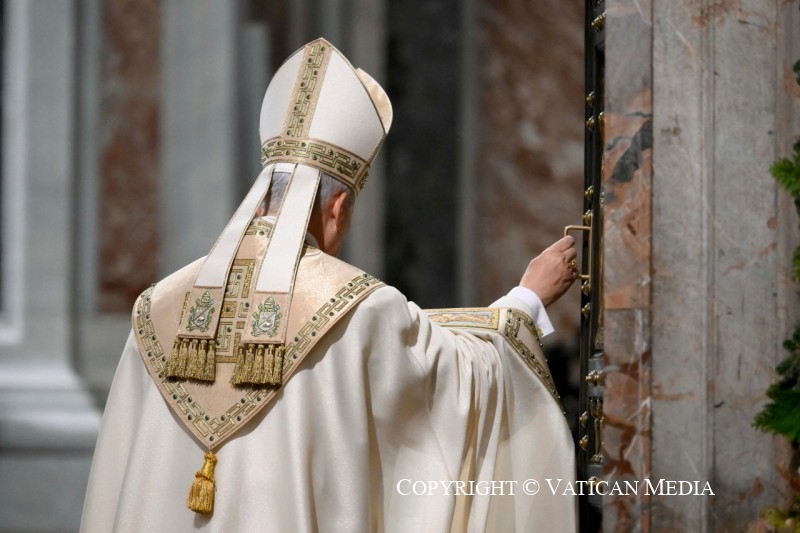
Pope Leo XIVPope Leo XIV  (@Vatican Media)

Pope: Holy See will not be silent bystander amid global inequality and war

Receiving new Ambassadors to the Holy See, Pope Leo XIV tells them the Holy See will not be a silent bystander amid global inequality and conflict.

Pope Leo XIV on Friday received the Letters of Credence of thirteen new Ambassadors accredited to the Holy See, representing Uzbekistan, Moldova, Bahrain, Sri Lanka, Pakistan, Liberia, Thailand, Lesotho, South Africa, Fiji, Micronesia, Latvia, and Finland.

Welcoming them during the Jubilee Year of Hope, he reminded them of its theme and highlighted its call to recover “the confident trust that we require, in the Church and in society, in our interpersonal relationships, in international relations, and in our task of promoting the dignity of all persons and respect for God’s gift of creation.”

He linked this appeal to his first words as Bishop of Rome, when he invoked the greeting of the risen Christ, “Peace be with you,” and renewed his invitation to work for what he has called an “unarmed and disarming peace.”

Commit to peace

Peace, he stressed, is “not merely the absence of conflict,” but “an active and demanding gift… built in the heart and from the heart.” It requires a commitment to renounce “pride and vindictiveness” and to resist “the temptation to use words as weapons.” This vision, he said, becomes more urgent “as geopolitical tension and fragmentation continue to deepen in ways that burden nations and strain the bonds of the human family.”

Turning to the consequences of global instability, Pope Leo XIV noted that “the poor and the marginalised suffer most from these upheavals.”

Echoing Pope Francis, he reminded the diplomats that “the measure of the greatness of a society is found in the way it treats those most in need.”

He reaffirmed the concern expressed in his Apostolic Exhortation Dilexi Te, that the world must not “avert its gaze from those who are easily rendered invisible by rapid economic and technological change.”

Holy See will not be a silent bystander

In this context, Pope Leo stated that “the Holy See will not be a silent bystander to the grave disparities, injustices and fundamental human rights violations in our global community.”

The Church’s diplomacy, he added, is “consistently directed toward serving the good of humanity,” attentive especially to “those who are poor, in vulnerable situations or pushed to the margins of society.”

The Pope thus urged the newly accredited Ambassadors to join the Holy See in fostering renewed multilateral cooperation “at a moment when it is sorely needed,” expressing his hope that together they might help the international community “lay the foundations for a more just, fraternal and peaceful world.”

With the support of the Secretariat of State, he concluded, may your mission “open new doors of dialogue, foster unity and advance that peace for which the human family so ardently longs.”

2025年12月6日

☩「人間の均衡ある成長を保証、保護することが、AIの”成果”を管理する枠組み確立に欠かせない」-教皇、「AIと私たちの共通の家への配慮」会議参加者たちへ

Pope Leo XIV meets with the participants in the Conference "Artificial Intelligence and Care of Our Common Home"Pope Leo XIV meets with the participants in the Conference “Artificial Intelligence and Care of Our Common Home”  (@VATICAN MEDIA)

(翻訳・編集「カトリック・あい」南條俊二)


2025年12月5日

☩「バーチャル(仮想現実的)な繋がりは、リアルな人間関係を代替できない」-国際修道会総長連合の総会参加者へ

Pope Leo meets with 160 participants in the General Assembly of the Union of Superiors General in the Synod Hall. Pope Leo meets with 160 participants in the General Assembly of the Union of Superiors General in the Synod Hall.   (@VATICAN MEDIA)

*最も重要なのは神との関係との関係を育むこと—祈り


さらに、最も重要なのは、「神との関係を育むこと」とされ、「だからこそ、祈りは、あらゆる奉献生活者の人生の根本であり、心が主に向かって開き、信頼をもって願い、受け取ることを学ぶ関係性の空間なのです… 祈りにおいて、私たちは真の姿、すなわちあらゆるものに依存する被造物であり、創造主の慈愛に満ちた御手に委ねられている存在であることを証しするのです」と説かれた。

デジタルという手段とリアル(実物)の間を航行する—「光と影」のバランスをとりながら、「共に語り、共に聴くこと」—教皇は挨拶の最後にこう締めくくられた。「nova et vetera(新旧)を統合する、という挑戦を受けましょう。神との関係、そして互いとの関係を保ち育みつつ、怠惰や恐れから、主が我々の手に置かれた新たな才能を軽んじたり、埋もれさせたりすることなく」。

(翻訳・編集「カトリック・あい」南條俊二)

2025年11月27日

☩「皆さんも祈りで私に同行してください」教皇、トルコ、レバノン訪問を前に、信者たちに願われる

Pope Leo at the General AudiencePope Leo at the General Audience  (@Vatican Media)

(翻訳・編集「カトリック・あい」南條俊二)

2025年11月26日

☩「ニカイアではキリスト教徒の結束を、レバノンでは平和を訴えたい」-教皇、27日からのトルコ・レバノン訪問を前に

*二か国歴訪中の感謝祭を米国人としてどう過ごすか


 最後に、二か国歴訪中に感謝祭を迎えられるが、(感謝祭を祝うことが慣習になっている)米国人としてどう過ごすか、と問われた教皇は、「この素晴らしい祝祭を、全ての人が、異なる信仰を持つ人々、 信仰を持たない人々も含め、誰かに感謝の言葉を伝え、私たちが受けた数多くの賜物、何よりもまず命の賜物、信仰の賜物、一致の賜物を認識するよう促したい。すべての人々が平和と調和を促進するよう努め、与えられた多くの賜物に対して神に感謝するよう勧めたいと思います」と答えられた。

(翻訳・編集「カトリック・あい」南條俊二)


2025年11月26日

☩「教会すべてが、信仰告白への熱意を新たにするように」-教皇、ニカイア公会議1700周年を記念する使徒的書簡『In Unitate Fidei(信仰の統一において)』を発表

Pope Leo XIVPope Leo XIV  (@VATICAN MEDIA)

(翻訳・編集「カトリック・あい」南條俊二)

**使徒的書簡『In Unitate Fidei(信仰の統一において)』の英語版全文以下の通り。


Apostolic Letter “In unitate fidei” by Pope Leo XIV on the occasion of the 1700th anniversary of the Council of Nicaea, November 23, 2025


1. In the unity of faith, proclaimed since the beginning of the Church, Christians have been called to walk in harmony, guarding and transmitting the gift they have received with love and joy. This is expressed in the words of the Creed, “I believe in one Lord Jesus Christ, the Only Begotten Son of God… for our salvation he came down from heaven,” that were formulated 1700 years ago by the Council of Nicaea, the first ecumenical gathering in the history of Christianity.

As I prepare for my Apostolic Journey to Türkiye, I would like this Letter to encourage the whole Church to renew her enthusiasm for the profession of faith. For centuries, this enduring confession of faith has been the common heritage of Christians, and it deserves to be professed and understood in ever new and relevant ways. To this end, a significant document by the International Theological Commission was approved:Jesus Christ, Son of God, Saviour. 1700thAnniversary of the Ecumenical Council of Nicaea. I mention this document because it provides valuable insights for studying the importance and relevance of the Council of Nicaea, not only in its theological and ecclesial dimensions, but also in its cultural and social aspects.

2. “The beginning of the gospel of Jesus Christ, the Son of God”: with these words Saint Mark begins his Gospel, summarizing its entire message in the affirmation of Jesus Christ’s divine sonship. Similarly, the Apostle Paul knows that he is called to proclaim God’s good news concerning his Son who died and rose again for us (cf.Rom1:9). Indeed, Jesus is God’s definitive “yes” to the promises of the prophets (cf.2Cor1:19-20). In Jesus Christ, the Word, who was God before time, through whom all things were made — as the prologue of Saint John’s Gospel says — “became flesh and dwelt among us” (Jn1:14). In him, God became our neighbor, to the extent that whatever we do to any of our brothers and sisters, we do to him (cf.Mt25:40).

In this Holy Year, dedicated to the theme of Christ our hope, it is a providential coincidence that we are also celebrating the 1700thanniversary of the First Ecumenical Council of Nicaea, which in 325 proclaimed the profession of faith in Jesus Christ, Son of God. This is the heart of the Christian faith. Even today, during every Sunday Eucharistic celebration, we recite the Nicene-Constantinopolitan Creed, the profession of faith that unites all Christians. In these difficult times we are living, amid so many concerns and fears, threats of war and violence, natural disasters, grave injustices and imbalances, and the hunger and misery suffered by millions of our brothers and sisters, this Creed gives us hope.

3. The times of the Council of Nicaea were no less turbulent. When it began in 325, the wounds inflicted by the persecutions of Christians were still fresh. The Edict of Milan (313), issued by the emperors Constantine and Licinius, had seemed to herald the dawn of a new era of peace. However, in the wake of external threats, disputes and conflicts soon arose within the Church.

Arius, a priest from Alexandria in Egypt, taught that Jesus was not truly the Son of God. Though more than a mere creature, he was believed to be an intermediate being between the inaccessible God and humanity. Moreover, there would have been a time when the Son “did not exist.” This view was in line with the prevailing mindset of the time and therefore seemed plausible.

However, God does not abandon his Church. He always raises up courageous men and women who bear witness to the faith, as well as shepherdswho guide his people and show them the way of the Gospel. Bishop Alexander of Alexandria realized that Arius’ teachings were not at all consistent with Sacred Scripture. Since Arius was not conciliatory, Alexander summoned the bishops of Egypt and Libya to a Synod, which condemned Arius’ teachings. He then sent a letter to the other bishops of the East providing a detailed report. In the West, it was Bishop Hosius of Cordoba, Spain, who took action. He had already proven himself a fervent confessor of the faith during the persecution of Emperor Maximian and enjoyed the trust of the Bishop of Rome, Pope Sylvester.

However, Arius’ followers also rallied together. This led to one of the greatest crises in the Church’s first millennium. The reason for the dispute was not a minor detail. It concerned the essence of the Christian faith, namely the answer to the decisive question that Jesus had asked his disciples at Caesarea Philippi: “Who do you say that I am?” (Mt16:15).

4. As the controversy raged on, Emperor Constantine realized that the unity of the Church, and indeed the Empire itself, was in danger. He therefore summoned all the bishops to an ecumenical, or universal, council in Nicaea to restore unity. The Synod, known as the “Synod of the 318 Fathers,” was presided over by the emperor, and the number of bishops gathered together was unprecedented. Some of them still bore the marks of the torture they had suffered during the persecution. The vast majority of them came from the East, while it seems that only five were Westerners. Pope Sylvester entrusted the task to the theologically authoritative figure of Bishop Hosius of Cordoba and sent two Roman presbyters.

5. The Council Fathers bore witness to their fidelity to Sacred Scripture and Apostolic Tradition, as professed at baptism in accordance with Jesus’ command: “Go therefore and make disciples of all nations, baptizing them in the name of the Father and of the Son and of the Holy Spirit” (Mt28:19). In the West, various formulas already existed, including the one known as the Apostles’ Creed.[1]In the East, too, there were many baptismal professions similar in structure. The language used was not erudite or complicated, but rather — as was later affirmed — simple and understandable to the fishermen of the Sea of Galilee.

In light of this, the Nicene Creed begins with the following profession of faith: “I believe inone God, the Father almighty, maker… of all things visible and invisible.”[2]In this way, the Council Fathers expressed their faith in the one and only God. This point was uncontested during the Council. However, a second article was the subject of dispute. It too was based on biblical language and professed faith inoneLord, Jesus Christ, the Son of God. The debate arose from the need to address the question raised by Arius regarding how “Son of God” should be understood and how it could be reconciled with biblical monotheism. The Council therefore aimed to define the correct meaning of faith in Jesus as “the Son of God.”

The Fathers confessed that Jesus is the Son of God inasmuch as he is of the substance (ousia) of the Father… “begotten, not made, consubstantial (homooúsios) with the Father.” This definition was a radical rejection of Arius’ thesis.[3]In order to express the truth of the faith, the Council adopted two words — “substance” (ousia) and “consubstantial” (homooúsios) — which are not found in Scripture. The Council’s intention in doing so was not to replace biblical statements with Greek philosophy. On the contrary, the Council used these terms precisely to affirm biblical faith with clarity and to distinguish it from Arius’ error, which was deeply influenced by Hellenism. For this reason, the accusation of Hellenization should be directed at the false doctrine of Arius and his followers, not the Fathers of Nicaea.

The Fathers of Nicaea were firm in their resolution to remain faithful to biblical monotheism and the authenticity of the Incarnation. They wanted to reaffirm that the one true God is not inaccessibly distant from us, but on the contrary has drawn near and has come to encounter us in Jesus Christ.

6. In order to convey its message in the simple language of the Bible and the liturgy familiar to the entire People of God, the Council incorporated some expressions from the baptismal profession: “God from God, Light from Light, true God from true God.” The Council hereby adopted the biblical metaphor of light: “God is light” (1Jn1:3; cf.Jn1:4-5). Just as light radiates and communicates itself without diminishing, so the Son is the reflection (apaugasma) of God’s glory and the imprint (character) of his being (hypostasis) (cf.Heb1:3;2Cor4:4). The incarnate Son, Jesus, is therefore the light of the world, and the light of life (cf.Jn8:12). Through baptism, the eyes of our hearts are enlightened (cf.Eph1:18), so that we too may be a light in the world (cf.Mt5:14).

Moreover, the Creed affirms that the Son is “true God from true God.” In many places, the Bible distinguishes lifeless idols from the true and living God. The true God is the God who speaks and acts in the history of salvation: the God of Abraham, Isaac and Jacob; the God who revealed himself to Moses in the burning bush (cf.Ex3:14); the God who sees the misery of the people, hears their cry, and guides and accompanies them through the desert in the pillar of fire (cf.Ex13:21); the God who speaks to them with a voice of thunder (cf.Deut5:26) and has compassion on them (cf.Hos11:8-9). Christians are therefore called to turn away from lifeless idols to the living and true God (cf.Acts12:25;1Thess1:9). To this end, Simon Peter proclaims at Caesarea Philippi: “You are the Christ, the Son of the living God” (Mt16:16).

7. The Nicene Creed does not formulate a philosophical theory. It professes faith in the God who redeemed us through Jesus Christ. It is about the living God who wants us to have life and to have it in abundance (cf.Jn10:10). For this reason, the Creed then continues with the words of the baptismal profession: the Son of God who “for us men and for our salvation… came down from heaven, and… became man… suffered death… and rose again on the third day… ascended into heaven… and will come again… to judge the living and the dead.” It is thus clear that the Council’s statements regarding faith in Christ are rooted in the history of salvation between God and his creatures.

Saint Athanasius, who had participated in the Council as deacon to Bishop Alexander and later succeeded him as Bishop of Alexandria in Egypt, repeatedly and effectively emphasized the soteriological dimension of the Nicene Creed. He wrote that the Son, who came down from heaven, “made us children of the Father and, deified mankind by becoming himself man. Therefore, he was not man, and then became God; but he was God, and then became man, and that to deify us.”[4]This is only possible if the Son is truly God: no mortal being can, in fact, defeat death and save us; only God can do so. He has freed us through his Son made man, so that we might be free (cf.Gal5:1).

It is worth emphasizing the verbdescendit, in the Nicene Creed: “he came down.” Saint Paul describes this movement in strong terms: “[Christ] emptied himself, taking the form of a slave, being born in human likeness” (Phil2:7). The prologue to the Gospel of Saint John likewise states that “the Word became flesh and dwelt among us” (Jn1:14). The Letter to the Hebrews also teaches that “we do not have a high priest who is unable to sympathize with our weaknesses, but we have one who in every respect has been tested as we are, yet without sin” (Heb4:15). On the eve of his death, he humbled himself like a slave to wash the feet of his disciples (cf.Jn13:1-17). Only when he was able to put his fingers into the wound of the risen Lord’s side did the Apostle Thomas confess: “My Lord and my God!” (Jn20:28).

It is precisely by virtue of his Incarnation that we now encounter the Lord in our brothers and sisters in need: “As you did it to one of the least of these brothers and sisters of mine, you did it to me” (Mt25:40). The Nicene Creed does not depict a distant, inaccessible and immovable God who rests in himself, but a God who is close to us and accompanies us on our journey in the world, even in the darkest places on earth. His immensity is revealed when he makes himself small, laying aside his infinite majesty to become our neighbor in the little ones and in the poor. This revolutionizes pagan and philosophical conceptions of God.

Another phrase from the Nicene Creed is also particularly revealing for us today. The biblical statement “became flesh” is clarified by adding the word “man” after “incarnate.” Nicaea thus distances itself from the false doctrine that theLogostook on only a body as an outer covering and not the human soul, which is endowed with intellect and free will. Instead, it seeks to affirm what the Council of Chalcedon (451) would later explicitly declare: in Christ, God assumed and redeemed the whole human being, body and soul. Saint Athanasius explains that the Son of God became man so that man might be deified.[5]This enlightening understanding of divine revelation was prepared by Saint Irenaeus of Lyon and Origen, and then further developed with great richness in Eastern spirituality.

Divinization in no way implies the self-deification of man. On the contrary, divinization protects us from the primordial temptation to want to be like God (cf.Gen3:5). What Christ is by nature, we become by grace. Through the work of redemption, God not only restored our human dignity as his image, but the One who created us in a wondrous way, has now made us partakers in his divine nature in an even more wondrous way (cf.2Pet1:4).

Divinization, then, is true humanization (becoming fully human). This is why human existence points beyond itself, seeks beyond itself, desires beyond itself, and is restless until it rests in God.[6]Deus enim solus satiat, God alone satisfies man!”[7]Only God, in his infinity, can satisfy the infinite desire of the human heart, and for this reason the Son of God chose to become our brother and redeemer.

8. As we have already said, Nicaea clearly rejected the teachings of Arius. However, Arius and his followers did not give up. The Emperor Constantine himself and his successors increasingly sided with the Arians. The termhomooúsiosbecame a bone of contention between the Nicene and anti-Nicene factions, thus triggering other serious conflicts. Saint Basil of Caesarea eloquently described the ensuing confusion by likening it to a nighttime naval battle in a violent storm.[8]Saint Hilary, on the other hand, testified to the orthodoxy of the laity in contrast to the Arianism of many bishops, acknowledging that “the ears of the people are holier than the hearts of the priests.”[9]

Saint Athanasius became the firm foundation of the Nicene Creed through his unyielding and steadfast faith. Although he was deposed and expelled from the Episcopal See of Alexandria five times, he returned each time as bishop. Even while in exile, he continued to guide the People of God through his writings and letters. Like Moses, Athanasius was unable to enter the promised land of ecclesial peace. This grace was reserved for a new generation, known in some places as the “Nicene youth.” In the East, this generation included the three Cappadocian Fathers: Saint Basil of Caesarea (c. 330-379), who was given the title “the Great;” his brother Saint Gregory of Nyssa (335-394); and Basil’s greatest friend, Saint Gregory Nazianzen (329/30-390). In the West, significant figures include Saint Hilary of Poitiers (c. 315-367), his student Saint Martin of Tours (c. 316-397) and, above all, Saint Ambrose of Milan (333-397) and Saint Augustine of Hippo (354-430).

The particular merit of the three Cappadocians was bringing to completion the formulation of the Nicene Creed by showing that, in God, Unity and Trinity are in no way contradictory. This development led to the formulation of the article of faith concerning the Holy Spirit at the First Council of Constantinople in 381. Consequently, the Creed took the name “Nicene-Constantinopolitan Creed,” and now states: “I believe in the Holy Spirit, the Lord, the giver of life, who proceeds from the Father, who with the Father and the Son is adored and glorified, who has spoken through the prophets.”[10]

At the Council of Chalcedon in 451, the Council of Constantinople was recognized as ecumenical, and the Nicene-Constantinopolitan Creed was declared to be universally binding.[11]It therefore constituted a bond of unity between the East and the West. In the 16thcentury, it was also upheld by the ecclesial communities that arose from the Reformation. The Nicene-Constantinopolitan Creed is thus the common profession of all Christian traditions.

9. The path that began with Sacred Scripture and led to the profession of faith in Nicaea, subsequently accepted in Constantinople and Chalcedon, and again in the 16thand 21stcenturies, has been a long and consistent one. All of us, as disciples of Jesus Christ, are baptized “in the name of the Father, and of the Son and of the Holy Spirit.” We make the sign of the cross on ourselves and we are blessed. We conclude each prayer of the psalms in the Liturgy of the Hours with “Glory be to the Father, and to the Son, and to the Holy Spirit.” Both the liturgy and the Christian life are thus firmly anchored in the Nicene-Constantinopolitan Creed: what we profess with our mouths must come from the heart so that we may bear witness to it with our lives. We must therefore ask ourselves: What about our interior reception of the Creed today? Do we experience that it also affects our current situation? Do we understand and live out what we say every Sunday? What do these words mean for our lives?

10. The Nicene Creed begins by professing faith in God, the Almighty, the maker of heaven and earth. For many people today, however, God and the question of God have almost no meaning in their lives. The Second Vatican Council pointed out that Christians are at least partly responsible for this situation, because they do not bear witness to the true faith; they hide the true face of God with lifestyles and actions that diverge from the Gospel.[12] Wars have been fought, and people have been killed, persecuted and discriminated against in the name of God. Instead of proclaiming a merciful God, a vengeful God has been presented who instils terror and punishes.

In this sense, the Nicene Creed invites us to examine our conscience. What does God mean to me and how do I bear witness to my faith in him? Is the one and only God truly the Lord of mylife, or do I have idols that I place before God and his commandments? Is God for me the living God, close to me in every situation, the Father to whom I turn with filial trust? Is he the Creator to whom I owe everything I am and have, whose mark I can find in every creature? Am I willing to share the goods of the earth, which belong to everyone, in a just and equitable manner? How do I treat creation, the work of his hands? Do I exploit and destroy it, or do I use it with reverence and gratitude, caring for and cultivating it as the common home of humanity?[13]

11. The profession of faith in Jesus Christ, our Lord and God is the center of the Nicene-Constantinopolitan Creed. This is the heart of our Christian life. For this reason, we commit to follow Jesus as our master, companion, brother and friend. But the Nicene Creed asks for more: it reminds us not to forget that Jesus Christ is the Lord (Kyrios), the Son of the living God who “for our salvation came down from heaven” and died “for our sake” on the cross, opening the way to new life for us through his resurrection and ascension.

Naturally, following Jesus Christ is not a wide and comfortable path. However, this often demanding or even painful path always leads to life and salvation (cf.Mt7:13-14). The book of the Acts of the Apostles recounts the new way (cf.Acts19:9, 23; 22:4, 14-15, 22) that is Jesus Christ (cf.Jn14:6). Following the Lord necessarily entails following the way of the cross, which, through repentance, leads us to sanctification and divinization.[14]

If God loves us with all his being, then we too must love one another. We cannot love God whom we do not see without loving our brother and sister whom we do see (cf.1Jn4:20). Love for God without love for neighbor is hypocrisy; radical love for our neighbor, especially love for our enemies, without love for God, requires a “heroism” that would overwhelm and oppress us. In following Jesus, the ascent to God passes through descent and dedication to our brothers and sisters, especially the least, the poorest, the abandoned and the marginalized. What we have done to the least of these, we have done to Christ (cf.Mt25:31-46). In the face of disasters, wars and misery, we bear witness to God’s mercy to those who doubt him only when they experience his mercy through us.[15]

12. Finally, the Council of Nicaea is relevant today because of its great ecumenical value. Indeed, the achievement of unity among all Christians was one of the main objectives of the last Council, the Second Vatican Council.[16] Exactly thirty years ago, Saint John Paul II further promoted this conciliar message in his EncyclicalUt Unum Sint(25 May 1995). In this way, together with the great anniversary of the First Council of Nicaea, we also celebrate the anniversary of the first ecumenical Encyclical. It can be considered a manifesto that brought up to date the same ecumenical foundations laid down by the Council of Nicaea.

Thanks to God, the ecumenical movement has achieved much in the last sixty years. It is true that full visible unity with the Orthodox and Eastern Orthodox Churches and with the ecclesial communities born of the Reformation has not yet been reached. Nevertheless, ecumenical dialogue, founded on one baptism and the Nicene-Constantinopolitan Creed, has led us to recognize the members of other Churches and ecclesial communities as our brothers and sisters in Jesus Christ, and to rediscover the one universal community of Christ’s disciples throughout the world. We share the same faith in the one and only God, the Father of all people; we confess together the one Lord and true Son of God, Jesus Christ, and the one Holy Spirit, who inspires us and impels us towards full unity and the common witness to the Gospel. Truly, what unites us is much greater than what divides us![17] In a world that is divided and torn apart by many conflicts, the one universal Christian community can be a sign of peace and an instrument of reconciliation, playing a decisive role in the global commitment to peace. Saint John Paul II reminded us, in particular, of the witness of the many Christian martyrs from all Churches and ecclesial communities: their memory unites us and spurs us on to be witnesses and peacemakers in the world.

In order to carry out this ministry credibly, we must walk together to reachunity and reconciliation among all Christians. The Nicene Creed can be the basis and reference point for this journey. It offers us a model of true unity in legitimate diversity. Unity in the Trinity, Trinity in Unity, because unity without multiplicity is tyranny, multiplicity without unity is fragmentation. The Trinitarian dynamic is not a dualistic and exclusive “either/or,” but rather a decisive bond, “both/and.” The Holy Spirit is the bond of unity whom we worship together with the Father and the Son. We must therefore leave behind theological controversies that have lost theirraison d’êtrein order to develop a common understanding and even more, a common prayer to the Holy Spirit, so that he may gather us all together in one faith and one love.

This does not imply an ecumenism that attempts to return to the state prior to the divisions, nor is it a mutual recognition of the currentstatus quoof the diversity of Churches and ecclesial communities. Rather, it is an ecumenism that looks to the future, that seeks reconciliation through dialogue as we share our gifts and spiritual heritage. The restoration of unity among Christians does not make us poorer; on the contrary, it enriches us. As at Nicaea, this goal will only be possible through a patient, long and sometimes difficult journey of mutual listening and acceptance. It is a theological challenge and, even more so, a spiritual challenge, which requires repentance and conversion on the part of all. For this reason, we need the spiritual ecumenism of prayer, praise and adoration, as expressed by the Creed of Nicaea and Constantinople.

Let us therefore invoke the Holy Spirit to accompany and guide us in this work.

Holy Spirit of God, you guide believers along the path of history.

We thank you for inspiring the Symbols of Faith and for stirring in our hearts the joy of professing our salvation in Jesus Christ, the Son of God, consubstantial with the Father. Without him, we can do nothing.

Eternal Spirit of God, rejuvenate the faith of the Church from age to age. Help us to deepen it and to return always to the essentials in order to proclaim it.

So that our witness in the world may not be futile, come, Holy Spirit, with your fire of grace, to revive our faith, to enkindle us with hope, to inflame us with charity.

Come, divine Comforter, source of harmony, unite the hearts and minds of believers. Come and grant us to taste the beauty of communion.

Come, Love of the Father and the Son, gather us into the one flock of Christ.

Show us the ways to follow, so that with your wisdom, we become once again what we are in Christ: one, so that the world may believe. Amen.

From the Vatican, 23 November 2025, Solemnity of Our Lord Jesus Christ, King of the Universe

LEO PP. XIV

____________________

[1]L.H. Westra,The Apostles’ Creed. Origin, History and Some Early Commentaries,Turnhout 2002 (Instrumenta patristica et mediaevalia, 43).

[2]First Council of Nicaea,Expositio fidei: CC COGD 1, Turnhout 2006, 196-8.

[3]Saint Athanasius of Alexandria,Contra Arianos,I, 9, 2 (ed.Metzler,Athanasius Werke, I/1,2, Berlin – New York 1998, 117-118)From the statementsofSaint AthanasiusinContra Arianos I, 9,it isclear thathomooúsiosdoes not mean “of similarsubstance,” but “of the same substance” as the Father; it is therefore not a question of similarity of substance, but of identityof substance between Father and Son. The Latin translation ofhomooúsiostherefore rightly speaks ofunius substantiae cum Patre.

[4]Saint Athanasius of Alexandria,Contra Arianos,I, 38, 7 – 39, 1: ed.Metzler,Athanasius Werke, I/1,2, 148-149.

[5]Saint Athanasius of Alexandria,Cf.De incarnatione Verbi,54, 3: SCh 199, Paris 2000, 458;id.,Contra arianos,I, 39; 42; 45; II, 59ss.: ed.Metzler,Athanasius Werke, I/1,2, 149; 152, 154-155 e 235ss.

[6]Cf. Saint Augustine,Confessions,I, 1: CCSL 27, Turnhout 1981, 1.

[7]Saint Thomas Aquinas,In Symbolum Apostolorum,art. 12:ed.Spiazzi,Thomae Aquinatis, Opuscula theologica, II, Taurini – Romae 1954, 217.

[8]Saint Basil,De Spiritu Sancto,30.

[9]Saint Hilary,Contra Arianos, vel Auxentium, 6. Mindful of the voices of the Fathers, the learned theologian, later Cardinal and now Saint and Doctor of the Church, John Henry Newman (1801-1890), investigated this dispute and came to the conclusion that the Nicene Creed has been preserved above all bythe sensus fideiof the people of God. SeeOn Consulting the Faithful in Matters of Doctrine (1859).

[10]First Council of Constantinople,Expositio fidei: CC,Conc. Oec. Gen. Decr. 1, 5720-24.The statement“andproceeds from the Father and the Son (Filioque)” is not found in the text of Constantinople; it wasinserted into the Latin Creed byPopeBenedict VIII in 1014 and is a subjectofOrthodox-Catholic dialogue.

[11]Council of Chalcedon,Definitio fidei: CC,Conc. Oec. Gen. Decr. 1, 137393-138411.

[12]Second Vatican Ecumenical Council,Pastoral Constitution on the Church in the Modern WorldGaudium et spes,19:AAS58 (1966), 1039.

[13]Cf.Francis,Encyclical LetterLaudato Si’ (24 May 2015), 67; 78; 124:AAS107 (2015), 873-874; 878; 897.

[14]Cf.Francis,Apostolic ExhortationGaudete et Exsultate(19 March 2018), 92:AAS110 (2018), 1136.

[15]Cf.Francis,Encyclical LetterFratelli Tutti(3 October 2020), 67; 254:AAS112 (2020), 992-993; 1059.

[16]Cf.Second Vatican EcumenicalCouncil,Decree on EcumenismUnitatis Redintegratio,1:AAS57 (1965), 90-91.

[17] Cf. Saint John Paul II, Encyclical LetterUt Unum Sint(25 May 1995), 20:AAS87 (1995), 933.

[01615-EN.01] [Original text: Italian]


2025年11月23日

☩「聖歌隊は歌を通じて、他者の祈りを助ける奉仕、”見せびらかし”にならないように」ー「王であるキリスト」の祝日の「聖歌隊の聖年」ミサで

(2025.11.23 Vatican News )

 教皇レオ14世は23日、聖ペトロ大聖堂で、「聖歌隊の聖年」にあたってのミサを捧げられ、参加した数千人の聖歌隊員たちに「一致して歌うこと、信仰をもって共に歩む民として、自らの奉仕を教会の統一のしるしとして生きるように… 典礼音楽が交わりを育み、教会全体が前進する助けとならねばなりません」と説かれた。

 「キリスト王の祭日」のこの日、教皇は合唱団員と音楽家に対し、「教会内における愛と一致と共同体性の奉仕としての自らの使命を再発見するように」と促され、その日の応答詩編を取り上げ、「典礼は、私たちを招いています… 賛美と喜びのうちに共に歩み、宇宙の王である主イエス・キリストとの出会いに向かうように」と語られた。

 さらに、「キリストの王権は、権力ではなく自己献身によって示されます。その力は愛、その玉座は十字架であり、そこから王国は世界に輝きを放つのです」と強調。「聖なる音楽は、神の愛の神秘に根ざしています… 歌うことは愛する者の特権です」と聖アウグスティヌスの言葉を引用され、「歌い手は、愛だけでなく、心に宿る痛み、優しさ、渇望をも表現します」と述べられた。

 教皇はまた、音楽を「言葉だけでは伝えきれないものを伝える人類の賜物」とされ、「教会の活動において、歌は、復活されたキリストが父なる神に捧げる『新しい歌』となり、洗礼を受けた者は『恵みの歌い手』として、キリストにおける新たな命の喜びを現すのです」と説かれた。

 聖歌隊員に対して、「自らの働きを教会の結束の模範と見なすように」と促された教皇は、聖アウグスティヌスの言葉を再び引用され、「歩みながら歌うように。希望に支えられた旅人のように。聖歌隊の一員であることは、共に前進すること…苦しむ兄弟姉妹を慰め…困難が優勢に見える時に彼らを励ますことです」と強調。アンティオキアの聖イグナティオの言葉、「汝らの一致と調和ある愛から、イエス・キリストに歌え…神の声に同調して歌え」も引用し、「一致した声」を教会の調和の象徴とされた。

 教皇は続けて、聖歌隊員としての奉仕は「準備と献身、そして何よりも深い霊的生活を要する真の奉仕」であり、「歌を通じて、他者の祈りを助けるもの」と指摘。「皆さんは、舞台に立っているのではなく、共同体の一部なのです。信徒の完全な参加を妨げる”見せびらかし”ではなく、一致を育むために召されている」として、「典礼音楽を”パフォーマンス化”すること」への注意をなさった。

 「聖歌隊は、”小さな家族”であり、緊張が生じることもありますが、『試練の中でも神を賛美しながら歴史を歩む教会』の象徴であり続けるのです」と聖歌隊員たちを励まされ、最後に、聖セシリアにすべての聖歌隊員を託された。聖セシリアは「生涯を通じて最も美しい愛の歌を捧げ…キリストに完全に身を捧げた」人物だ。

(翻訳・編集「カトリック・あい」南條俊二)

2025年11月23日

☩「技術を活用して信仰を深め、政治的な区別を避けるように」教皇、全米カトリック青年会議参加者へ―23日「世界青年の日」を前に

(2025.11.22 Vatican News   Devin Watkins)


(翻訳・編集「カトリック・あい」南條俊二)


2025年11月23日

☩「現地教会を支え、多様性に富む組織内の一致を守り続けるように」-教皇、国際カリタスのメンバーたちを激励

教皇レオ14世、国際カリタスの理事会メンバーと  2025年11月21日 バチカン宮殿教皇レオ14世、国際カリタスの理事会メンバーと  2025年11月21日 バチカン宮殿  (@Vatican Media)

(2025.11.21 バチカン放送)

  教皇レオ14世が21日、国際カリタスの理事会メンバーとお会いになり、国際カリタス総裁・菊地功枢機卿をはじめ、希望をテーマとした聖年にローマに集った関係者らを歓迎。同組織の全教会と世界中の人々へ誠実な奉仕に対して感謝を表された。

 教皇は挨拶で、国際カリタスが設立以来、「キリストは貧しい人々、最も助けを必要とする人々、見捨てられた人々を特別に愛される」(教皇フランシスコ、国際カリタス総会参加者への挨拶=2025.5.11)という教会の宣言を体現してきたことを振り返られた。

 そして、ご自身の使徒的勧告『ディレクシ・テ』は「まさにこの神秘について考察しています。キリストから受ける愛は決して私的な宝ではなく、常に私たちの手に委ねられた使命であり、愛は私たちを前進させ、奉仕者とし、自らの目を他者の傷に開かせます」と話された。

 さらに、国際カリタスが「長い間、教会の母なる愛の象徴として、ペトロの後継者と共に歩み、すべての人に尊厳をもって奉仕する用意が常にあることを心強く思います」とされた。

 国際カリタスの使命は、ご自身が外交団との最初の出会いで示された「世界における教会の活動を支える三つの柱とは平和・正義・真理だ」というビジョンと共鳴するもの、と強調。「これらの柱は抽象的な理想ではなく、カリタスの日々の仕事です。避難民の家族に寄り添い、貧しい人々の権利を守り、忘れられた人々に耳を傾ける心を提供することを通し、教会の証しはより信頼されるものとなるのです」と語られた。

 教皇は、こうした精神のもと、国際カリタスが「現地教会を支え、信徒の指導者の育成を強化し、多様性に富む組織内の一致を守り続けるように」と激励され、国際カリタスの仕事を、貧しい人々の母、マリアに託され、関係者に改めて感謝を述べると共に、「神が、勇気、忍耐、喜びという恵みをもって、皆さんを祝福してくださるように」と祈られた。

(編集「カトリック・あい」)

2025年11月22日

☩「分裂が広がり、弱い者が取り残される今の時代にこそ、シノダリティ(共働性)の実践が求められている」-教皇、イタリアの司教団に

(2025.11.20  バチカン放送)

 教皇レオ14世が20日、イタリア司教協議会総会の最終日に開催地のアッシジを訪問。総会閉幕の挨拶をなさった。

教皇はまず、教皇就任初めてのアッシジを訪問しとことに喜びを表明。「ここは、世界が切実に必要としている信仰、兄弟愛、平和のメッセージを伝える大変意義深い場所」とされた。

そして、聖フランシスコがアッシジで主から「聖なる福音に従って生きるように」との啓示を受けたことを指摘され、「イエスを見上げることは、私たちにとっても、何よりもまず求められていることであり、今日、これまで以上に、イエス・キリストを中心に据え、福音の喜びが示す道に沿って、人々がイエスとの個人的な関係を築き、福音の喜びを見出す手助けをすることが重要になっています」と強調。

「イエスの御顔を見つめることで、私たちは兄弟たちの顔をも見つめることができるようになります… 私たちを、彼らへと駆り立てるのは、イエスの愛(コリントの信徒への手紙2・5章14節)、私たちの平和であるイエスへの信仰( エフェソの信徒への手紙2章14節)は、すべての人にイエスの平和の賜物をもたらすよう求めているのです」と語られた。

さらに教皇は、 「国の内外で分裂が広がるこの時代に、敵意や暴力に満ちたメッセージや言葉が横行し、効率を追求する中で最も弱い立場の人々が取り残され、テクノロジー全能が人々の自由を圧迫し、孤独が希望を蝕み、多くの不確実性が未来に重くのしかかっています」と指摘しつつ、「それでもなお、御言葉と聖霊は、共同体の中で友情と、兄弟愛、真の絆を創り出す者となるように、ためらわず、恐れず、他者に耳を傾け、緊張を和らげ、出会いの文化を育み、世界に対し平和の預言者となるように、私たちに呼びかけています」と説かれた。

そのうえで、教皇は、「シノダリティ(共働性)とは、何よりも、キリストと共に、神の王国に向かって、全人類と一致して歩むこと。重要なのは、共に働くことを学び、それぞれの教会で、開かれ、受容の心にあふれたキリスト教共同体の構築に尽力し、福音宣教のための相互の責任へと結びつけることです」と強調された。

イタリアの教会に対しては、「個人と社会の実存的な歩みを助け、包括的な人間主義を推進し続けること」「命の価値とあらゆる被造物への配慮を高め、合法性と連帯の文化を広めるために、公的議論の中で預言的な役割を果たすこと」を希望された。

最後に教皇は、「聖フランシスコの模範が、真の信仰に導かれた選択を行う力と、教会としてこの世における神の国のしるし・証しとなる力を、私たちに与えてくれるように」と祈られた。

2025年11月21日

◎教皇聖年連続講話「イエス・キリスト、私たちの希望」㉑「イエスは私たちに、『方向転換』し『歴史を変える』ことを求めておられる」

Pope Leo XIV at Wednesday General AudiencePope Leo XIV at Wednesday General Audience  (@VATICAN MEDIA)

(翻訳・編集「カトリック・あい」南條俊二)


2025年11月20日

☩「”機会”は失われつつある、被造物の管理者として、言葉でなく、迅速に行動を」ー教皇、COP30に参加の枢機卿、司教たちに

教皇レオ14世、ブラジル・ベレンに集った教会関係者にビデオを通し挨拶 2025年11月17日(教皇レオ14世、ブラジル・ベレンに集った教会関係者にビデオを通し挨拶=2025年11月17日 )

2025年11月19日

☩「教会共同体が、『信頼と対話』の模範となり、全ての人が尊重される場となるように」-教皇、未成年・弱者保護委員会の総会参加者へ

(2025.11.17 カトリック・あい)

 教皇レオ14世は17日、同日から始まった教皇庁未成年・弱者保護委員会の総会の参加者に向けて、 「尊厳を守る共同体の構築」と題するメッセージを送られた。

 バチカン広報局が発表したメッセージの全文以下の通り。

親愛なる兄弟姉妹の皆さん!

 皆さんに心から感謝を込めてご挨拶申し上げます。様々な修道会、そして数多くの奉献生活、使徒的生活、黙想的生活の機関を代表する皆さんが、私の心に深く響くテーマについて考察するために集まってくださいました。それは、「あらゆる人、特に未成年者や最も弱い立場にある人々の尊厳が守られ、促進される共同体をいかに築くか」というテーマです。

 尊厳とは、神がご自身の姿と似姿に人間を創造された(創世記1章26節参照)という事実から来る、神からの賜物です。それは功績や努力によって得られるものではなく、また私たちが所有するものや達成したことに依存するものでもありません。

 それは私たちに先立って与えられる賜物であり、神が「私たち一人ひとりを望まれ、今もなお望んでおられるという愛のまなざし」から生まれるものです。あらゆる人間の顔には、たとえ疲労や痛みに刻まれていても、創造主の善性の反映、いかなる闇も消し去ることのできない光が宿っています。

 隣人への思いやりと保護は、見抜く眼差しと傾聴する心の賜物です。それは「敬意と優しさをもって近づき、相手の重荷と希望を分かち合いたい」という願いから生まれます。隣人の命に責任を持つことこそが、「支配せず奉仕し、所有せず伴走する真の自由」を学ぶ道なのです。

 キリストへの完全な献身を表す奉献生活は、特に、受け入れの家庭であり、出会いと恵みの場となるよう招かれています。貞潔、貧しさ、従順の道において主に従う者たちは、真の愛が自らの限界の認識から生まれることを発見します。すなわち、弱さの中にあっても愛されていることを知り、それこそが他者を敬意と優しさ、そして自由な心をもって愛する力を与えるのです。

 それゆえ、あらゆる形態の虐待を防止する方法、そして未成年者を保護するために講じた措置について、真実と謙虚さをもって説明責任を果たす方法に関する経験と学習プロセスを共有しようとする皆さんのご意向を、私は高く評価し、励まします。

 教会共同体がますます「信頼と対話」の模範となり、「あらゆる人が尊重され、耳を傾けられ、価値ある存在として認められる場」となるよう、この取り組みを継続されることを強くお勧めします。正義が慈悲をもって実践される場所では、傷は恵みの入り口へと変容するのです。

 また、教皇庁未成年者保護委員会との連携を継続されるようお願いします。同委員会は、教会全体が保護の文化の中で成長するよう、献身的に促進し、伴走しています。

 教会の牧者であり花婿であるキリストと、すべての奉献生活者の母である聖母マリアに皆様をお委せし、心より祝福をお授けします。

(翻訳・編集「カトリック・あい」南條俊二)

2025年11月17日

☩「この世に満ちる多くの声よりも『神の言葉』が最優先されることを証しするように」ー教皇、カトリック聖書連盟との会合で

Pope Leo XIV kisses the book of the Gospels as he begins Rome's diocesan assembly at St. John Lateran on September 19, 2025Pope Leo XIV kisses the book of the Gospels as he begins Rome’s diocesan assembly at St. John Lateran on September 19, 2025  (@Vatican Media)

(2025.11.17 Vatican News  Devin Watkins)

 17日のカトリック聖書連盟との会合で、教皇レオ14世は、聖書学者や司牧者たちに「神の言葉を、全ての人々、特にデジタル空間で容易にアクセスできるように」と促された。若い世代がキリストに出会えるようにするためだ。

 教皇、カトリック聖書連盟のメンバーとの会合で、まず、「神の言葉への奉仕」に対する感謝を表明された。

 そして、第二バチカン公会議の「神の啓示に関する教義憲章『Dei Verbum(神の言葉)』」公布60周年と同憲章によって信者たちが聖書に容易にアクセスできるようにし、あらゆる場所で尊ばれるよう求められたことを振り返られた。

 続けて教皇は、この文書が「強い願望、確固たる信念、司牧的アプローチを今に伝えています」とされ、「『神の言葉』の教えは明確です… 私たちは『畏敬の念をもって神の言葉を聞き、信仰をもってそれを宣べ伝える』よう召されている。そして『聖書への容易なアクセスは全てのキリスト教信徒に提供されるべき』なのです」と強調された。

 「カトリック聖書連盟も同様の目標を共有しています… 神の言葉を司牧活動の核とし、教会の活力ある霊感の源として提供することを目指しています」とされた教皇は、聖書学者たちに、「自らの使命への忠実さを新たにするように… その使命は、ケリグマ、すなわち私たちの主イエス・キリストの『救いの神秘』を宣べ伝えることに他なりません。教会は、キリストに、注意深く、愛をもって耳を傾けることで、常に福音から命を得ているのです」「聖霊の導きのもと、教会は、福音から自らの歩むべき方向を絶えず再発見します。聖霊は、万事を教え、御子が語られたことをすべて思い起こさせてくれるのです」と指摘された。

 次に教皇は、現代における「聖書への容易なアクセス」について考察され、「信徒に、聖書を読むよう奨励せねばなりません… 人間の言葉で表された神の愛と個人的に出会うためです」と述べられるとともに、「今日、新たな世代の人々は、新たに出来上がった『デジタル環境』に住むようになっており、そこでは神の言葉が容易に覆い隠されてしまいます… 新たな共同体は、聖書とはあまり触れることがなく、しばしば、特定の利害によって歪められた文化的空間に置かれている」と警告。

 そして、カトリック聖書連盟のメンバーに対し、次のように求められた—「神の言葉を聞いたことのない人々が、(神の言葉である)聖書にアクセスできるよう、教会が最善の支援をどう行えるかを自問してください。自らへの問い掛けが、聖書への新たな福音宣教の形態を生み出し、聖書への道を開くことを願います。そうして神の言葉が人々の心に根を下ろし、すべての人を神の恵みの中で生きさせるように」と述べた。

 最後に教皇は、すべてのキリスト教徒に対し「聖書が『生ける神の霊によって書かれた、インクではなく生ける神の霊によって記された生ける手紙』となり、この世に満ちる多くの声よりも神の言葉が最優先であることを証しするように」と呼びかけられた。そして、「神の母であり、御言葉が肉となった胎である聖母マリアが、我々に聴く術を教え、御言葉への従順を強め、主を賛美する道へと導いてくださいますように」と祈られ、講話を締めくくられた。

(翻訳・編集「カトリック・あい」南條俊二)

2025年11月17日

☩「暴力、戦争、飢餓で苦しむ人々にも祝福を」-教皇、「貧しい人々のための世界祈願日」に1300人と食事会

(2025.11.16 Vatican News   Antonella Palermo)

(翻訳・編集「カトリック・あい」南條俊二)

2025年11月17日